A New Chapter for Public Education in Sindh
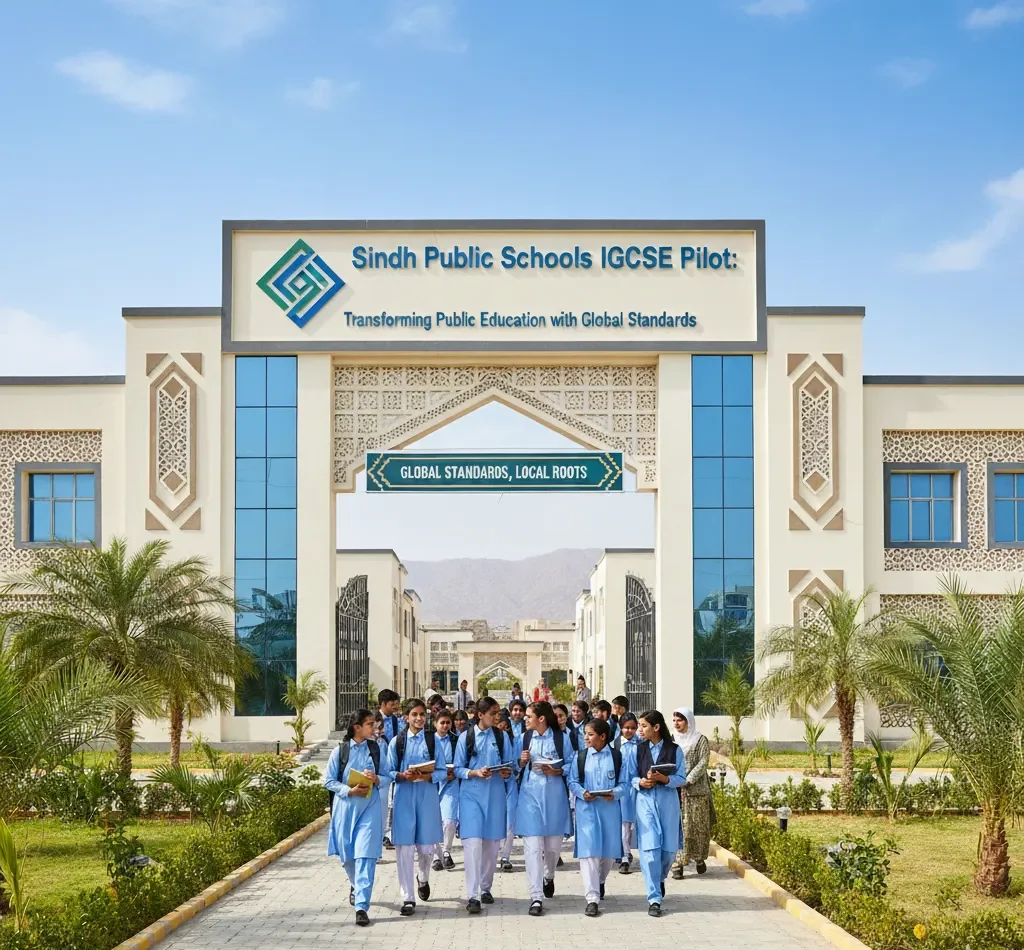
The announcement that the Sindh School Education and Literacy Department will launch an IGCSE pilot in selected public schools marks a significant shift in the province’s public education strategy. The department has entered into an expanded collaboration with Cambridge International to provide students in government schools the opportunity to study under international benchmarks. By offering also the IGCSE curriculum in public-sector schools, Sindh aims to deliver a more globally recognized qualification and better prepare learners for higher education also in sindh boards and professional challenges ahead. The keyphrase “Sindh public schools IGCSE pilot” sets the tone for this shift in the introduction and appears early to anchor the topic.
This move comes at a timely moment: at the same ceremony where the pilot was announced, students from Sindh and Balochistan secured 120 awards in Cambridge examinations — including 26 for highest marks worldwide and 53 provincial toppers — reinforcing the credibility of Cambridge programmes.
Aligning Public Education with Global Standards
In the thoughts of the IGCSE programme into public schools conveys a strong message: that access to international curricula is no longer confined to private institutions. For many students in Sindh, this pilot means access to globally benchmarked education without the usual financial barrier so for. The department emphasised that the updated education system must foster creativity, innovation and practical skills, not just rote learning.
One of the advantages of the IGCSE framework is that it emphasizes critical thinking, research, collaboration — skills that are increasingly essential in a technology-driven and unpredictable global economy. For example, Cambridge itself notes how the IGCSE prepares learners with “problem-solving, independent research, collaboration and presenting arguments”. For teachers and administrators in Sindh public schools, this will mean new training, new assessment approaches, and a shift from exam-driven instruction to a more learner-centred model. The promise of this pilot is that it may serve as a blueprint for expanding such international programmes across the public sector.
What This Means for Students, Families and the Future
This section for students in the pilot schools, the benefits are clear: globally recognised certification, better alignment with universities and international opportunities, and a more engaging curriculum. Families in Sindh now have reason to hope that government education might provide the same standard as private institutions. At the awards ceremony, the Sindh Education Minister, Sardar Shah, described the awardees as “symbols of Pakistan’s bright future” and stressed the need for a system that equips students for modern challenges.
For the broader education mostly landscape in Pakistan, this pilot could help bridge the gap between local and international systems, potentially boosting standards in public schools. It also sends a signal to stakeholders that government education is stepping up its ambitions. Challenges remain: ensuring adequate resources, teacher training, infrastructure, and equity of access across rural and urban schools. But the start of the “Sindh public schools IGCSE pilot” is a meaningful first step.
In conclusion, the Sindh initiative – launching IGCSE in public schools – represents a promising evolution in the province’s approach to education. in this way for students, families and educators, it opens a gateway to global standards and future-readiness. As the pilot progresses, its success will determine whether the broader public-sector system can shift into a new era of educational excellence and equity.
For more on Cambridge International programmes in Pakistan, you can visit Cambridge’s official statement on June 2024 results. (The News)