Home Blog Page 2

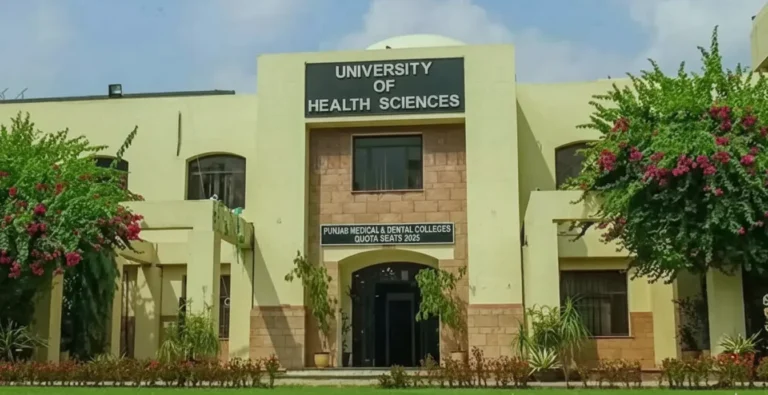
Punjab Medical & Dental Colleges Quota Seats 2025

Punjab medical and dental colleges quota seats 2025 admissions annoucned right now have officially been announced, and applications equally devided for MBBS and BDS quota seats will open from December 1, 2025, through the University of Health Sciences (UHS) online portal crossing old method of Submission. This year, the entire quota admission process has been shifted to more digitalize a digital system to ensure transparency, easy access, and equal opportunities for equal and over all students across the coutnry like from Islamabad, AJK, Gilgit-Baltistan, Balochistan, and former FATA. Applicants can now apply directly online without manual procedures or delays, making the admission journey smoother and more reliable and more trusted manners.

Admissions on quota-based seats

The dates for submitting applications for admissions on quota-based seats in Punjab’s medical and dental colleges have been announced. According to the announcement, applications for these quota seats will be accepted from December 1, 2025. Candidates can submit their applications through the University of Health Sciences (UHS) online portal.

Under the previous policy, the criteria and procedure for nominations from other provinces were manual, which led to many doubts and complaints of inconvenience. However, this time, students who wants apply this applicants from other provinces have also been given the opportunity to apply directly online through the portal.

Number of seats in the quota system approved by the provincial cabinet

Region / Province MBBS BDS
Islamabad Capital 26 4
Azad Jammu & Kashmir including all Dist. 36 3
GB-Gilgit–Baltistan 55 5
Balochistan (Goodwill Category) 20
Former FATA 21 6
Balochistan – HEC Scholarship 28 10
Former FATA – HEC Scholarship 28 10

Term and Conditions

It is also a mandatory requirement that applicants must possess a provincial domicile. Along with this, the PM&DC rules, all certificates, educational documents, and the institution’s application procedure can be read on the website. Students must upload their documents in good condition—clear, complete, viewable, and original. In case of any objection, students may lose their eligibility to apply. It is also necessary to meet the qualifications and requirements set by the PM&DC. Furthermore, in the recently issued guidance material, the University of Health Sciences has clarified that a modern digital system has been introduced to make the admission process on quota seats completely transparent. Accepting this post system, applicants can receive timely information regarding the status of their applications, any objections, and required documents for submission. Merit lists will also be published online on the scheduled dates, ensuring that students and parents do not face uncertainty during the admission process not after. These measures guarantee that the entire admission procedure remains fair, reliable, authentic and convenient for students.

Date of Submission Applications

Applicants must upload their applications along with the required documents on the online portal by 15th September. After the due date, applicants will not be able to upload or submit any form or document on the portal system. UHS has also established a special help desk for the guidance of candidates, headed by the Deputy Registrar (Public Affairs), Yasir Sultan.

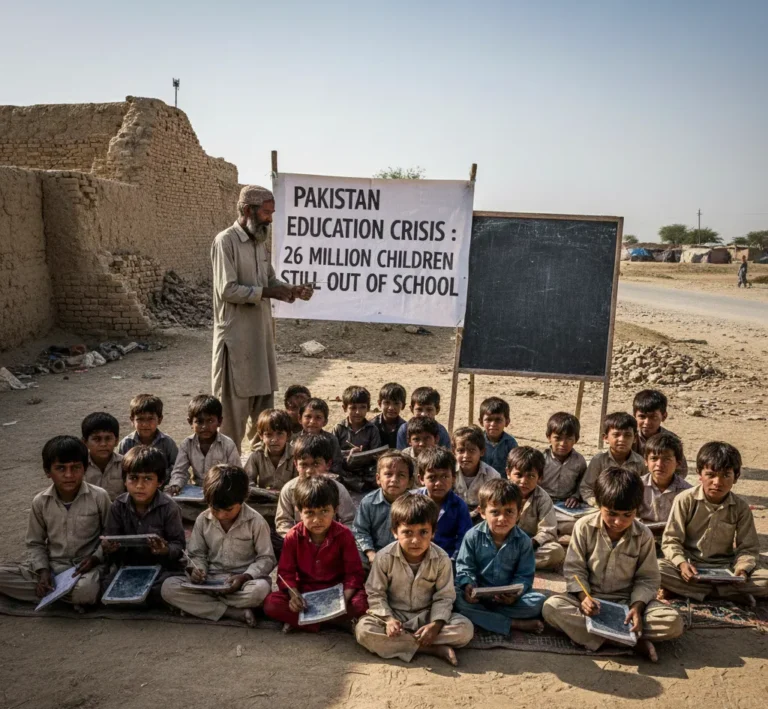
Pakistan Education Crisis: 26 Million Children Still Out of School

0

Pakistan’s Education Crisis Highlighted at International Conference

Last few years out-of-school children in Pakistan now exceed 26 million, a crisis that demands immediate and collaborative action from government leaders, educators, and international experts. Diromg the Conference at the 14th Biennial International Conference in Islamabad, officials emphasized the urgent need for inclusive and equitable education reforms to bring marginalized so children especially girls and minority groupsinto the mainstream schooling system.

Government Focus on Mother-Language Curriculum & Inclusion

The Federal Parliamentary Secretary said that in order Pakistan education system to bring out-of-school children and Out-of-school crisis into the educational mainstream, the government is striving to develop and provide single national curricula in mother languages so that children who face difficulties in learning Urdu and English can be encouraged to continue their education. She added that SDGs education goals separate subjects have also been designed for minority communities. She emphasized the critical need forirls’ education Pakistan and Inclusive education policies need to improve in upgrading polcies. Delegates from various Asian countries are participating, and a sustainable policy will be formulated. Farah Naz Akbar also expressed hope that such conferences will help identify various reforms, policies, successes, and failures that will guide us on the path forward.

Academic Leaders Call for Accelerated SDG Progress

aT that point the Vice Chancellor of Allama Iqbal Open University (AIOU), Professor Dr. Nasir Mahmood, said that we are standing at an important juncture as 2030 approaches, and in line with the Sustainable Development Goals (SDGs), it is need to accelerate Mother-language education efforts to ensure quality education and access to learning. He said that although we are aware of the issues and have developed policies, what is required now is an effective strategy to solve them and also Education accessibility Asia. Dr. Edward Vickers, President of the Comparative Education Society of Asia, also aruge and explained the objectives of the conference. This year’s central theme is “Challenges for Inclusive and Equitable Education,” aimed at promoting practical research and policy recommendations to advance equity, inclusion, and sustainability in education across the region more then pakistan.

Global Experts Share Policy Insights

Professor Dr. Muhammad Shahid Farooq, Secretary General of the Comparative Education Society Pakistan Educational inequality Pakistan shared his views with the participants on the challenges faced by the region in the context of educational technology, special education Digital learning Pakistan early childhood development, and the Sustainable Development Goals (SDGs). More than 200 international delegates are participating in the conference.

2026 Punjab Exam Schedule: Matric & Intermediate Dates Announced Amid Education Reforms”

Punjab Finalizes 2026 Exam Schedule as Education Reforms Take Shape Amid Alarming Dropout Rates

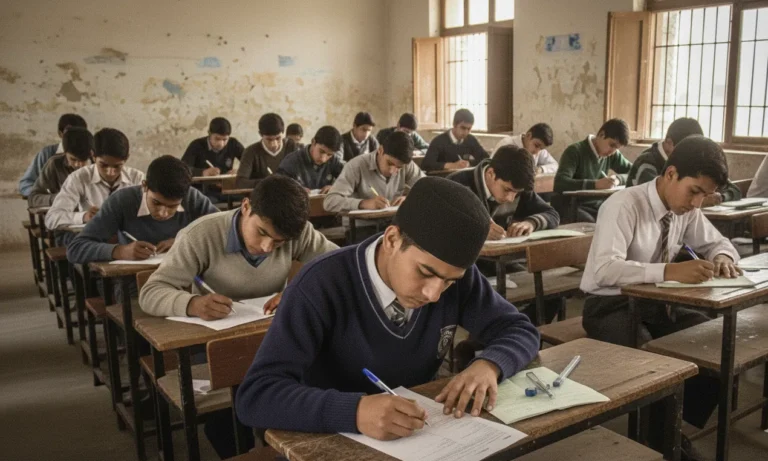
The Punjab Education Department has officially announced the academic year examination schedule for Matric to FA/Intermediate for 2026. A formal schedule has also been issued in this regard. This announcement more and probably is considered an important milestone in the province’s educational process and reforms, and a clear step toward fundamental development.

As per schedule this announcement, the Matric examinations will begin on March 3, 2026, while the Intermediate examinations will start on May 5, 2026. This early and timely issuance of the examination schedule has been made in the context of reforms introduced in the new educational policy. The purpose of issuing the schedule in this manner is to mentally and physically prepare students for the exams and to positively strengthen the educational structure in Punjab. Additionally, this announcement was also necessary due to the poor student results in 2025. Students had faced many difficulties regarding the exam schedule; with the early release of the schedule Punjab matric exams March 2026 in the year 2026 they will no longer face the problems that emerged in the form of the 2025 results.

A Restructured Academic Calendar

After schedules of exams with the announcement of the academic examinations, the Education Department Punjab intermediate exams May 2026 has also declared the academic year 2026. The main reasons of this announcement, the academic year 2026 will begin on April 1, 2026. The distribution of free textbooks for low-income individuals and students will start from April 5, 2026 and more this policy should be continue for upcoming years.

Punjab education department exam schedule 2026 has strongly emphasized ensuring the timely distribution of textbooks and the proper preparation and implementation of the examination schedule is clear define that uncertainty and anxiety among students can be eliminated. The purpose of initiating this teaching method is not only to improve the quality of education but also to ensure comprehensive implementation of the new reforms.

Shift toward Standardized Assessment

It has also been clarified that this announcement applies to the eighth grade as well. It should be noted that in Punjab, the eighth-grade syllabus is taught as the introductory year of the ninth grade. It has further been clarified that eighth-grade students will have to sit for board-style examinations. This means that under this announcement and the new policy, eighth-grade students will take their exams under the supervision of government educational boards instead of their respective schools or institutions. The purpose of this policy is to improve and make more effective the educational standards of students at the foundational level.

Departmental measures

Following this policy, it is expected that just as departmental measures will enable students to prepare themselves better for exams, the boards and the Education Department will also modernize their academic standards and improve the overall quality of education. Initially, these exam-related reforms are being appreciated and welcomed. Under this system, students not only get more time to understand the difficult syllabus but also have the opportunity to achieve better grades in exams based on improved mental readiness.

Officials say that in the future this policy will become clearer and more comprehensive, and wherever needed, further reforms will be introduced. It is hoped that its long-term positive outcomes will also begin to emerge.

A Sector Burdened by Deep Challenges

If we consider the educational issues of Punjab, there are many problems that require immediate attention in the education sector. The timetable, outdated teaching methods, fees, and an old, Out‑of‑school children Punjab 2026 worn-out curriculum are issues that are creating serious challenges in the educational system of Punjab as well as other provinces. At the end of results our education system is declining day by day. This decline is reflected in the increasing number of out-of-school children, high dropout rates, and the rapid decrease in literacy levels and also going decrease day by day.

Major concern in view, the educational boards and institutions of Punjab have begun working promptly on reforms. Govt and Departmental thinking that not only primary education institutions but also higher education bodies such as the Higher Education Commission (HEC) the mother of education in Pakistan are actively working on educational reforms, and significant changes are expected to be implemented in the near future also taking measure about Punjab textbook distribution 2026.

 Conclusion (A Pivotal Year Ahead)

Many expectations are being attached to the 2026 academic year examinations. Addressing fundamental challenges, organizing the schooling structure, and improving the declining educational activities have become essential needs of the time. The Punjab province is working on new educational policies  such as a revised curriculum, availability of textbooks, reduction of fees to increase enrollment, and measures to significantly reduce the alarming rate of student dropouts. Efforts are being made to work rigorously day and night to implement these policies.

Including the rising trend of school dropouts and Pakistan’s economic situation, Punjab is progressing in a much better direction. From the examination schedule and re structure of exams to the core educational framework, efforts are underway to ensure that outdated policies of Educational department are no longer reflected. All stakeholders and related departments are being taken into confidence to ensure effective implementation and to gain maximum benefit from these reforms and so on in future. The Punjab Education Department is already working with many stakeholders in this regard, and it is hoped that the upcoming academic years will serve as a positive foundation for a modern and improved educational system.

MDCAT Reforms in Pakistan: National Assembly Demands Urgent Changes in Medical Admissions

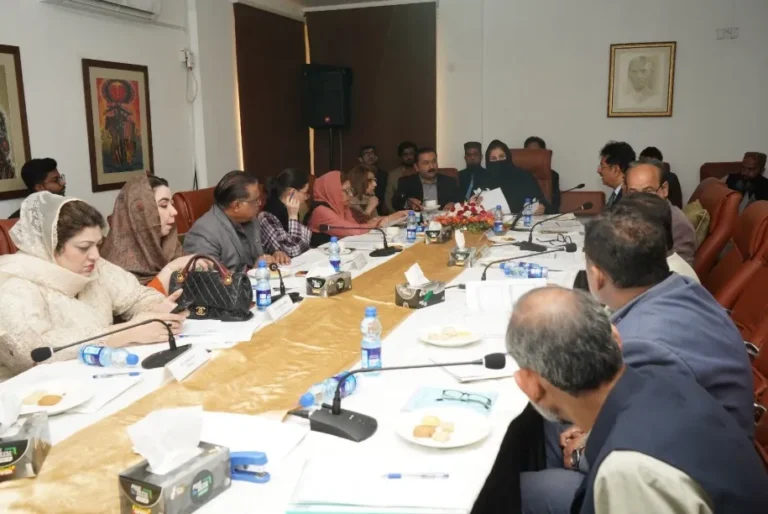
National Assembly Committee Demands Urgent Reforms in MDCAT and Medical Admissions

In a country like Pakistan, where there is an education crisis, a clear trend of change is also being seen in medical education admissions. This debate has intensified especially after the National Assembly Standing Committee on Health has demanded immediate and comprehensive reforms in MDCAT.

Background: Why MDCAT Needs Reform

It is undeniable that MDCAT reforms is the only and authoritative body in Pakistan regarding medical examination matters, which ensures the testing of thousands of students who pass their exams in dentistry on an annual basis. Completely contradictory levels, lack of clear policies. Due to inequality in this matter among the provinces, unfair distribution of funds, wrong policy and lack of effective strategy regarding dentistry at the government level, this sector is suffering from stagnation and substandard issues. Students often NMDCAT changes Pakistan complain about unexpected changes in the curriculum, many errors in the texting standards and chaotic policies, due to which many students are suffering from ill-will, which can be assessed in the form of a decrease in admissions. The standard of assessing proper medical qualifications is also deteriorating. These complaints are a challenge for the field of dentistry and MDCAT. This question and similar doubts are also causing confusion and anxiety for students in other provinces. If this issue is not addressed, the problems may become more obvious. 

Key Demands and Recommendations by the Committee

On medical admission policy Pakistan Keeping these issues in mind, the Standing Committee has formulated its recommendations for re-examination and presented them before the Committee. The contents IBCC equivalency issue and gist of these recommendations are as follows: 

1. Greater Transparency and Standardization in Testing

 The committee stressed the need for a uniform national testing model to make it effective and inclusive so that all students across Pakistan face the same level of difficulty and assessment criteria and to reduce the dangerous level of student apathy in this field. A proposal was made to eliminate the discrepancies found within the province. 

2. Reviewing MDCAT Validity and Admission Policies 

The importance of digital testing systems has been emphasized, and stress has been laid upon ensuring that MDCAT centers in all provinces incorporate innovation and improvements into modern digital training systems. It has been completely focused upon that human error should be minimized, and at the same time, it has also been proposed that corruption and favoritism committed at the staff level should also be eliminated. It should also be the responsibility of the provinces to ensure transparency in the examination process. 

3. Addressing Vacant Seats and Admission Inefficiencies 

The biggest loss of this flawed strategy is that, on an annual basis, MBBS and BDS seats remain vacant due to delayed transfers and ineffective policies. The committee emphasized MDCAT digital testing bringing transparency to these transfers and making the formal use of technology transparent in procedures like the waiting list. This is to ensure that these seats do not remain vacant every year, and students’ interest remains associated with the medical field of MDCAT, and economic losses are also minimized National Assembly Standing Committee health. 

4. IBCC Equivalency System Concerns

The IBCC equivalency system for O-Level and A-Level students has consistently been presented as a major problem. This seemingly MDCAT transparency unfair distribution MBBS BDS vacant seats Pakistan is a significant cause of anxiety among students.

  • Sense of Unfairness: Candidates strongly feel that this assessment system is not entirely impartial, which leads to the violation of rights for other students.
  • Favoring an Elite Class: The perception that the system inherently favors an “elite class” remains a persistent issue.

Committee Recommendations

The committee has recommended that modern reforms be implemented immediately in this policy, which is currently seen as unfair, non-transparent, and contradictory to international standards. The key focus is to resolve the issue of questions being raised about the transparency of the equivalency status without delay.

Impact of Proposed Reforms on Students and the Education System

The implementation of such proposed policies can bring about highly effective and modern improvements to the medical sector in Pakistan. The following benefits can be achieved by undertaking this work:

1. Predictable System & Student Engagement

  • Predictable System: The examination system will benefit from effective, pre-provided information, keeping students up-to-date.
  • Addressing Disheartened Students: Due to the chaotic irregularities in the previous policy, students are disheartened, which has led to a significant decrease in admissions—a matter of serious concern.
  • Building Confidence: Restoring confidence among students will strengthen this sector. A transparent, digitized testing model will enhance the candidates’ interest in the field.

2. Restoring Trust (Students & Parents)

  • Parental Confidence: Parents’ confidence will be restored, and people’s inclination towards the future of their children and the medical field will increase.
  • Ending Uncertainty: Due to the lack of an environment of trust, students have started to view their medical careers as bleak. By implementing these policies, all these issues can be resolved.

3. Institutional Stability

  • Institutional Reputation: Adherence to these policies will restore the reputation of the institutions.
  • Addressing Vacant Seats: The issue of vacant seats is also due to a lack of interest. The number of admissions will increase, students will gain confidence, and this long-standing problem will be solved.
Conclusion: A Turning Point for MDCAT and Medical Admissions

This initiative by the National Assembly Standing Committee is being commended, and it will mark the beginning of an era of modern reforms in the medical sector. If all the formulas regarding merit, ranging from the modern digital testing system based on these recommendations, are implemented fully and precisely), and the issues are resolved, it will represent trust and fair policies, which will also enhance the reputation of both the committee and the National Assembly. The purpose of introducing these policies is not only the restoration of trust but also the restoration of the MDCAT’s reputation among institutions and provinces. Furthermore, this will help address the situation where students are already leaving the country due to the economic crisis. Parents will gain confidence and have the opportunity to be free from worry about their children’s future.

How to Apply for the GB Scholarship: Complete Guide Eligibility and Form Details

0

The GB Scholarship Application Guide is essential for students in Gilgit-Baltistan who need financial support for their studies. The Directorate of Education receives thousands of applications for this need-based stipend each year. The scholarship is designed to reduce the educational burden on families with low income, helping students continue their schooling without interruption. This support plays a powerful role in creating equal learning opportunities in remote mountainous regions, where education expenses can become a major hurdle.

One of the most important aspects of this scholarship is its focus on transparency and merit. Students are required to provide accurate personal information, the occupation and income of their parents, and proof of previous academic performance. By doing so, the Department of Education GB ensures that the scholarship reaches those who genuinely deserve it. This makes the scholarship not only a financial aid but also a significant initiative towards building an educated and empowered youth in Gilgit-Baltistan.

How to Fill Out the GB Scholarship Form – Step-by-Step

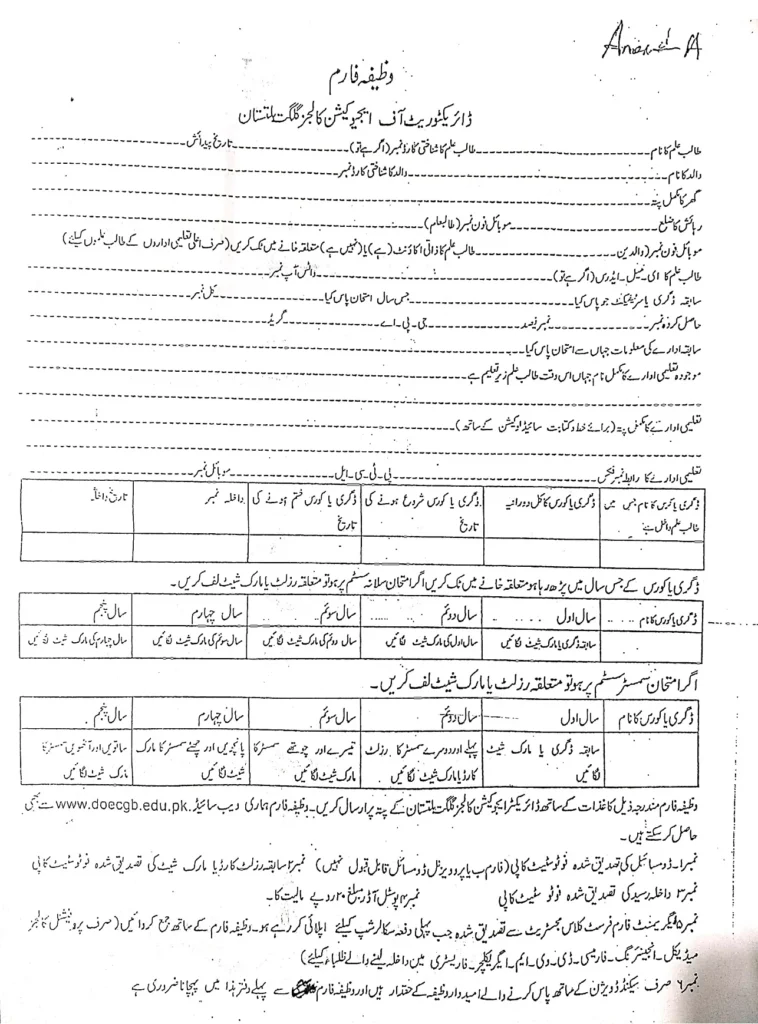
Filling out the GB scholarship form is simple as long as students understand each field clearly. The form requires the student’s name, father’s name, village, and school details. Students must also mention their class, distance from home to school, and the number of family members. This information helps the scholarship department determine financial and educational need. Another crucial requirement is providing the father’s occupation and annual income, which must be accurate to avoid rejection.

Sections for prior exam results, financial or medical difficulties, and attendance information are also included in the form. Students must be honest about any difficulties they have encountered, such as health problems or family emergencies. Because the stipend gives priority to struggling families, this raises the likelihood of approval. Students must attach supporting documentation, such as a school certificate, prior grades, a CNIC/B-Form, and proof of income, after completing all the information. The guardian’s signature is needed to confirm the information before submission. These procedures guarantee that the form is authentic, complete, and prepared for official review.

GB Scholarship Form Urdu 2025 – Student Stipend Application

Tips for a Successful Scholarship Application and Next Steps

The secret to success is filling out the GB Scholarship Application Guide form completely and accurately. All entries should be double-checked by students, particularly the annual income, class, school name, and exam results. Additionally, neat and legible handwriting speeds up the scholarship team’s processing of the form. Additionally, review efficiency is increased when necessary documents are attached in the correct order. Careful preparation is crucial because many applicants are turned down due to incomplete documentation.

Following submission, students need to keep up with official announcements from the Directorate of Education or their school administration. Attending interviews or presenting current income certificates are examples of extra verification that is occasionally needed. For record-keeping purposes, students are urged to retain scanned copies of their paperwork. Obtaining financial aid can make a big difference as education becomes more competitive, particularly for students in rural areas. The GB scholarship encourages students to confidently pursue academic excellence in addition to providing financial support for education.

HEC Reschedules LAT 2025 for Balochistan: New Test Date, Guidelines, and Student Updates

0

HEC Reschedules LAT 2025 for Balochistan Amid Security Concerns

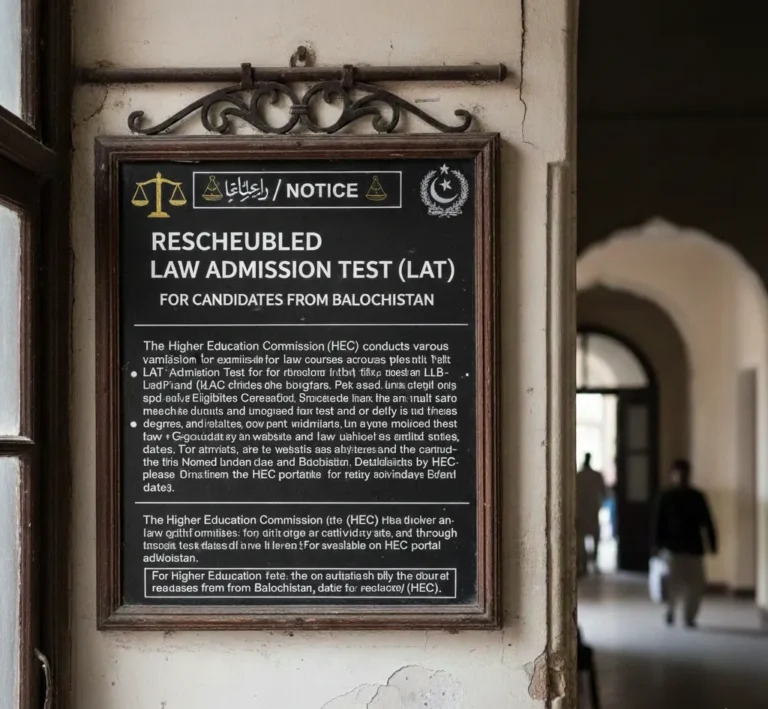
The HEC Reschedules LAT 2025 for Balochistan after assessing the province’s security conditions more shifting the test date from November 9 to November 30, 2025. This updated schedule aims to ensure a safe, well-managed, and stress-free examination environment for thousands of aspiring law students in the region. With the new date announced, candidates now have additional preparation time and are strongly encouraged to monitor HEC’s official channels for the latest updates.

This announcement will be welcome news to many law aspirants in the province who were on the fence about the dates. HEC Reschedules HEC announcements LAT test date 2025 Balochistan is highlights and underlines that the commission is a body that puts the welfare of students first, while at the same time LAT roll number slip, still being devoted to filling the academic timeline differently. Students should now be able to capitalize fully on the extra time to prepare and also keep connected for most forthcoming announcements now this providing education news Pakistan.

New Test Schedule and Instructions for LAT Candidates in Quetta

With the updated date confirmed, the LAT 2025 will now take place on November 30 in Quetta, the primary examination location for Balochistan students. HEC officials have assured that the revised date in LAT Quetta center was chosen to avoid disruptions and improve the coordination of exams. All candidates need to arrive at their examination venues on time and bring required materials, which include their new roll numbered slips after they are released, CNIC, and writing implement.

HEC has also encouraged students to continue to monitor their emails and the official HEC LAT website for updated information. The new roll slips will be sent out shortly, at which point students will need to download and print the new version of their roll numbered slip. **Note that any slips that were issued earlier, prior to the November 9 test date, are no longer valid.**

The commission has encouraged candidates to take advantage of the extended preparation law admission test and time by reviewing the LAT syllabus, past papers, and sample testing formats. Moreover, this is an excellent time for students further develop their concepts, writing skills regarding essays and personal statements, and working on MCQs under timed conditions.

Important Preparatory Tips and Guidance for LAT 2025 Aspirants

Due to the rescheduling of the exam, students now have an extra three weeks to prepare; an opportunity that should be taken seriously. The following are some good practical tips to help candidates having the best chance of success at the LAT 2025 in Balochistan respectively:

Revisit the Official LAT Agenda

Revising English, essay writing, personal statements, general knowledge and basic logic based questions can boost confidence and improve auxability and performance for the exam more update HEC LAT portal.

Engage with Authentic Preparation Sources

Prioritize HEC’s official website, LAT sample papers and reading material from reputable educational blogs rather than random decisions from social media and Balochistan education news.

Practice Under Exam Conditions

It is essential to practice under timing conditions. For the MCQs and essay, time yourself to complete the official time guidelines to increase speed and accuracy. Canidates can also vist HEC official website to take detailed information

Stay Updated on HEC Announcements

The commission provides updates on a regular basis, and it is important to stay aware of updates to ensure important instructions (like center changes or links to download updated roll number slips) are not missed.

The altered date for the LAT test is consistent with HEC’s overall mission of bringing fairness, safety, and a student-centered perspective to educational processes, especially in regions of security struggle, and now with a confirmed test date candidates can be refreshed and focused in their preparations.

Punjab PECTAA Smart Syllabus 2025–26 for Grade 9 Announced

Introduction: PECTAA Smart Syllabus 2025–26 Officially Released

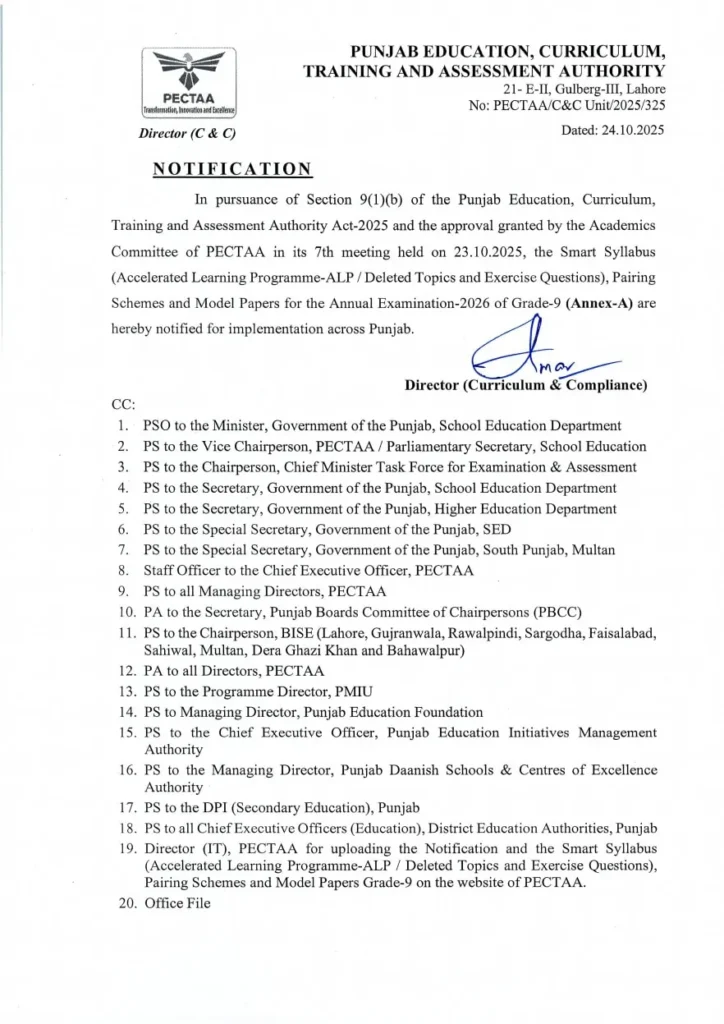
The PECTAA Smart Syllabus 2025–26 for Grade 9th all over the boards has officially been announced by the Punjab Education, Curriculum, Training & Assessment Authority (PECTAA). According to the newly issued notification, the Accelerated Learning Programme (ALP), deleted topics, pairing schemes, and model papers for the academic session 2025–26 and annual examination 2026 are now approved for implementation across Punjab. This revised smart syllabus should be apply because of aims to support students by reducing content load while improving concept clarity and examination preparation.

The notification—issued on 24 October 2025—highlights that the new syllabus has been approved also in the 7th meeting of the PECTAA Academics Committee, ensuring so that transparency and alignment with modern educational practices.

PECTAA Smart Syllabus 2025–26 Notification for Grade 9

Key Highlights of the PECTAA Notification 2025–26

The English notification confirms that under Section 9(1)(b) of the Punjab Education, Curriculum, Training & Assessment Authority Act 2025, the new Smart Syllabus (ALP) is officially in effect. The directive instructs all related departments, boards, district authorities, and school education officials to implement the syllabus from the current academic session.

Approval and Implementation

The syllabus was approved on 23 October 2025 during the PECTAA Academic Committee meeting. It includes:

  • Accelerated Learning Programme (ALP)
  • Deleted Topics
  • Exercise Questions
  • Pairing Schemes
  • Model Papers for Grade 9 (Annual Examination 2026)

This ensures students receive a reduced yet comprehensive curriculum, enabling better preparation for board exams and preparing.

Communication to All Departments

The notification is widely circulated across Punjab’s education system, including:

  • School Education Department
  • Higher Education Department
  • Boards of Intermediate & Secondary Education
  • Punjab Daanish Schools
  • Punjab Education Foundation
  • PMIU & CEO offices

This broad communication ensures unified implementation across government and private institutions.

Deleted Topics & Urdu Subject Details (Urdu Notification Explanation)

The Urdu circular provides specific clarity on the Urdu Grade 9 subject, mentioning the chapters and pages removed from the syllabus. This aims to reduce unnecessary content and help students focus on key learning outcomes.

Deleted Topics for Urdu Grade 9 (2025–26)

The notification lists the following chapters as deleted or excluded from the Grade 9 Urdu syllabus:

  1. حصہ نثر (Prose Section)

    • سبق: امانت کا حساب
      Pages: 69–76 (From “امن و انصار”)

    • سبق: قناعت
      Pages: 86–93 (From “فکر و فن اور فنون”)

  2. حصہ نظم (Poetry Section)

    • نظم: ذکرِ شہادت
      Pages: 111–117

  3. حصہ غزل (Ghazal Section)

    • غزل: جس کوچے میں دلبر جیدر علی آتش
      Pages: 122–126

The Urdu notice also instructs teachers to update lesson planning, remove deleted chapters from practice materials, and align daily teaching schedules with the new ALP syllabus.

PECTAA Smart Syllabus 2025–26 Notification for Grade 9

Why the PECTAA Smart Syllabus 2025–26 Matters for Students and Teachers

The revised syllabus is designed to help students manage workload efficiently, especially those preparing for the Grade 9 annual board exams. Here’s why the new PECTAA Smart Syllabus is important:

1. Reduced Workload — Better Exam Preparation

With deleted topics clearly listed, students can focus on essential content. The reduction in syllabus improves learning outcomes and reduces stress during board exam preparation.

2. Updated Pairing Scheme and Model Papers

The pairing scheme and model papers for annual exam 2026 will greatly assist students in understanding:

  • Question distribution
  • Marks weightage
  • Types of questions
  • Chapter-wise priority

This ensures alignment with exam patterns and boosts scoring potential.

3. Teacher-Friendly ALP Structure

Teachers will find it easier to plan lessons effective using the simplified ALP syllabus. The updated instructions makes it easy to structure weekly and monthly targets without overwhelming the classroom.

Punjab Education Foundation Announces Saturday Holiday, New School Timings & Recruitment Drive

Punjab Education Foundation Introduces New Saturday Holiday for Partner Schools

The Punjab Education Foundation (PEF) school schedule has officially and permanently changed with a newly announced holiday on Saturday for all partner schools. This change will impact thousands of students, teachers and parents across the province who have been organized into a six day academic calendar. With this announcement PEF school timings 2025 is attempting to allow for an even further balanced academic year that would reap the benefits of improved health for students and productivity for teachers in their classrooms.

Starting immediately, all PEF enrolled schools will close every Saturday. This is an ideal time for education authorities, more so, in Punjab, to acknowledge the importance of rest, efficacy of the classroom, and a learning environment with reduced stress. For many families this will be a welcome relief since it will bring PEF schools, once and for all, to have the same weekly schedule of instruction as Public and Private schools, other than Friday. With the new weekly closure, PEF encourages stability in academic value through the structure of a schedule by ensuring that each week follows a routine, students regularly attend school, and practices regarding the timing of the day continues to be consistent with an updated policy across PEF schools. Punjab Education Foundation notification all policies demonstrate PEF’s interest and commitment toward educational reform that continues to grow throughout the province.

Updated School Timings Effective Until April 15, 2026

In this way to the Saturday break, the PEF school timings have been officially revised. According to the updated notification, regular classes will now operate from 8:45 am to 1:30 pm, while on Fridays schools will close at 12:30 pm. These changes will remain in effect until April 15, 2026, ensuring consistency and clarity across all partner institutions so for.

The updated schedule is designed to support PEF recruitment advertisement better classroom management and reduce fatigue among younger students. Shortened 6th day on the week means friday timings also align with cultural routines, making the week more manageable for teachers and families.

This change comes amid Punjab’s other environmental challenges. Time in smog levels on the rise, controlled times minimizes student exposure to unhealthy air quality in the early morning hours. Private schools have attracted significant scrutiny for ignoring government directives to suspend outdoor activities for students due to smog. Latest develeopment have indicated that Punjab smog school timings private schools in Punjab disregarded the notice, scheduling outdoor trips for students to places like Joyland, Jallo Park, Safari Park, and the Lahore Zoo. The timing of PEF’s guideline sends a strong signal about student safety during this sensitive period.

PEF Launches Large-Scale Recruitment Drive With Over 100 New Vacancies

Alongside its schedule reforms, the Punjab Education Foundation recently launched a major recruitment campaign offering more than 100 vacancies across key departments. The hiring list includes Subject Specialists in core subjects, Network Support Engineers, Executive Assistants, and 10 Driver posts offering salaries of Rs. 57,500 per month.

This expansion highlights the foundation’s commitments to strengthening its workforce and improving administrative efficiency. With education evolving rapidly, PEF continues to rely on new talent to favor curriculum improvements, digital learning initiatives, and quality assurance processes.

For applicants across Punjab, this recruitment round presents significant career opportunities within one of the region’s most influential educational bodies. Job seekers are encouraged to stay updated through official channels to avoid misinformation and to apply within the given deadlines.

Canada Lifts Study Permit Caps for Master’s & PhD Students in 2026

Canada Opens Doors Wider for Graduate Students in 2026

In significant success for global scholars, the Canada will remove federal study permit caps for masters and doctoral applicants to public colleges and universities in January 2026. As part of the Immigration Levels Plan 2026-2028 Canada study permit update 2026 the new policy will support the goal Canada has set out to attract the best research talent from across the world. While promoting advanced education in Canada, the government seeks to reinvest the number of students as per IRCC graduate student policy per intake and strengthen Canada’s reputation as a global destination in innovation and discovery.

Faster Visa Processing for PhD Applicants

To facilitate the process, PhD students and their families gain a 14-day fast-track Faster Visa Processing for PhD Applicants and PhD visa Canada fast track study permit process to help them begin their academic journey in Canada more quickly. IRCC has also introduced a dedicated graduate student portal that shares information about study programs, scholarships also international students Canada 2026, and after graduation work opportunities, helping Canada become one of the most accessible for international scholars.(Learn more at IRCC official website)

Why This Policy Matters for Global Talent

While Canada is looking to limit undergraduate and college study permits, graduate students will not be included in those limits. This allows Canada to continue to bring talented researchers, scientists, and innovators into Canada who can contribute to the country’s economic and technological growth and sets  new Educational Trends. Canada is trying to achieve a balance between sustainability and progress master’s programs Canada for international students working towards limiting the temporary resident population to below 5% of the total population by 2027, which will help alleviate housing and infrastructure pressures while still enabling Canada to attract talented (innovation-focused) immigrants.

What Future Students Can Expect

Canada is expected to enroll around 150,000–155,000 new graduate students every year between 2026 and 2028. Such a stable intake reaffirms that international master’s and doctoral degree students are still highly regarded post-graduation work permit Canada in the Canadian immigration system. With positive post-study working options and an educational system focused on innovation, Canada is cementing its place as one of the leading destinations for research and higher education worldwide.

PPSC Abolish Academic Marks: Major Merit Reform Effective January 2026

A New Era Begins in Merit Assessment

The Punjab Public Service Commission (PPSC) is making a major change by deciding to exclude marks for academic qualifications from the final merit, starting January 1, 2026. Under the new policy and merit-based recruitmentcandidates‘ final selection order will be based completely on the written test and the interview. The PPSC abolish academic marks policy marks a historic turning point in Punjab’s civil service recruitment system. The Punjab Public Service Commission (PPSC) has officially decided to remove academic marks from the final merit calculation starting January 1, 2026. Under the new policy, candidates will be evaluated solely on their written exam and interview performance. This move is designed to eliminate bias caused by inconsistent grading systems across educational institutions, ensuring a more transparent and merit-based selection process.

Why This Reform Matters

The reform has generated a great deal of positive feedback from many former PPSC members, as well as senior civil servants and educationists, all of whom recognize it as, “one of the most progressive and reformative steps in the commission’s long history.” The elimination of academic marks rectifies entrenched inequities stemming from differentiation in marking standards between educational institutions. Many believe the new policy establishes equal opportunity to the extent that candidates are assessed solely on their performance which might include analytical skills, depth of knowledge about the subject area, and interview skills alone. This adjustment by the commission signals a clear sign that merit-based selection is not a slogan, but a structural approach to the core selection process.

Implications for Aspiring Candidates

For aspirants who are preparing PPSC interview preparation that are proctored by the PPSC, this change means revised expectations regarding exam preparedness or interview skills instead of relying on previous academic record. Applicants from varied academic experiences (whether academically strong or, perhaps, attaining middle-of-the-road academic grades) will, therefore, now start out in a more equal field. This highlights the importance of adroitly curating a smart study plan, conducting mock tests and/or assessments, developing general knowledge and current affairs, and feeling comfortable regarding interviews. Coaching centres and other aspirants will need to adapt to this new “normal” and fully justify a meritorious type of evaluation in which past academic credentialing will not serve any role in the final merit before government jobs Punjab 2025.

Looking Ahead: Fairness, Challenges & Opportunities

In PPSC reform 2026 while the policy is widely welcomed, the transition will require rigorous implementation and clear communication from the PPSC to avoid confusion among candidates and institutions. Ensuring the written test and interview formats remain robust, bias-free and transparent will be critical to fulfilling the reform’s promise of Punjab Public Service Commission update. If executed well, this reform could mark a turning point in institutional governance and serve as a blueprint for other provincial recruitment bodies. Ultimately, the move cements PPSC’s commitment to modern governance standards and may encourage increased public trust and participation in the civil service recruitment process.