Home Blog Page 5

AIOU Result Meaning FER1, FER2 & FAIL Explained Clearly Detail

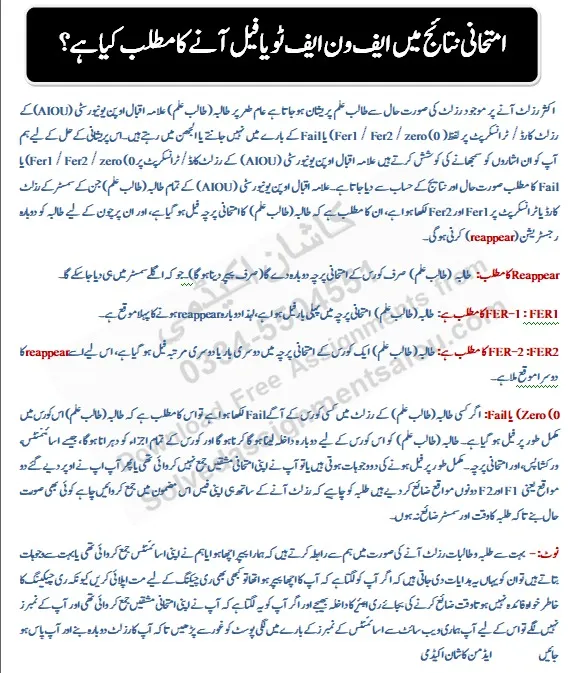
When checking their exam results, many students at Allama Iqbal Open University (AIOU) often get confused by terms like FER1, FER2, or FAIL on their result card. Understanding the AIOU Result FER1 FER2 Meaning is very important for every student because it shows whether they have to reappear in the exam or retake the entire course. In this guide, we’ll explain what FER1, FER2, and FAIL mean in AIOU results, how to deal with them, and what steps you should take next.
AIOU Result FER1 FER2 Fail Meaning Explained 2025

What Does FER1 Mean in AIOU Results?

  • FER1 (Fail Exam Report 1) means that you failed your course paper for the first time.
  • If your AIOU result shows FER1, it indicates your first failed attempt in that subject.
  • You are eligible for a reappear opportunity, meaning you only need to retake the exam paper, not the entire course.

Action Required:

Register for reappear in the next semester to attempt the paper again.

What Does FER2 Mean in AIOU Results?

FER2 (Fail Exam Report 2) means that you have failed the same paper for the second time.

This is your second and last reappear opportunity.

You can reattempt the exam in the next semester, but if you fail again, the course will be considered completely failed.

Action Required:

Prepare thoroughly and ensure you pass the paper on your second attempt.

What Does “Fail” or “Zero (0)” Mean in AIOU Results?

If your AIOU transcript or result shows FAIL or 0 (Zero), it means you are completely failed in that subject.

This happens due to either:

  • You did not submit your assignments or workshop components, or
  • You used up both FER1 and FER2 chances but still couldn’t pass.

 Action Required:

You must re-enroll in the full course, including assignments, workshops, and the final exam.

Reappear (Re-Exam) Meaning in AIOU

The term Reappear means that the student is required to sit for the exam paper again, but does not need to repeat assignments (if already passed). This option helps you save time and continue progress without waiting for a full re-admission.

Important Student Advice

Many students contact AIOU or academies saying their paper went well or they submitted all assignments but still failed.
Do not apply for rechecking, as AIOU rechecking rarely changes results and may waste your time.
Instead, register immediately for reappear to avoid missing the next semester.

If your assignments are missing or marks are not updated, check your assignment result section on the official AIOU website to ensure your record is complete. For more guidance visit this link in our website and follow the instructions about assignments Fail issues.

Final Words

Understanding AIOU Result FER1 FER2 Meaning helps you take the right step after receiving your result.
Remember:

  • FER1 = First failure, first reappear chance
  • FER2 = Second failure, final reappear chance
  • Fail/Zero (0) = Complete failure, retake full course

Stay proactive and manage reappear registration on time to save your semester and progress smoothly.
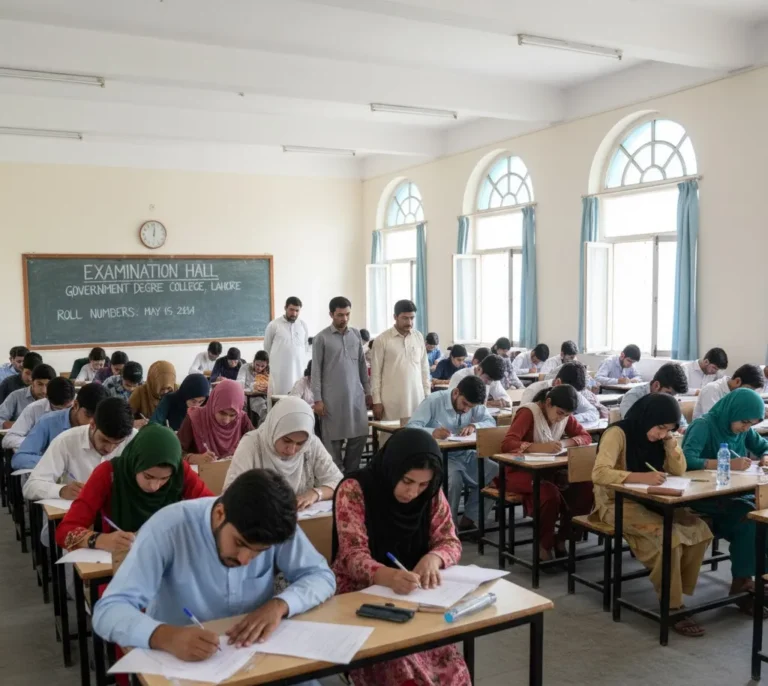
AIOU Result FER1 FER2 Meaning explained for fail and reappear students

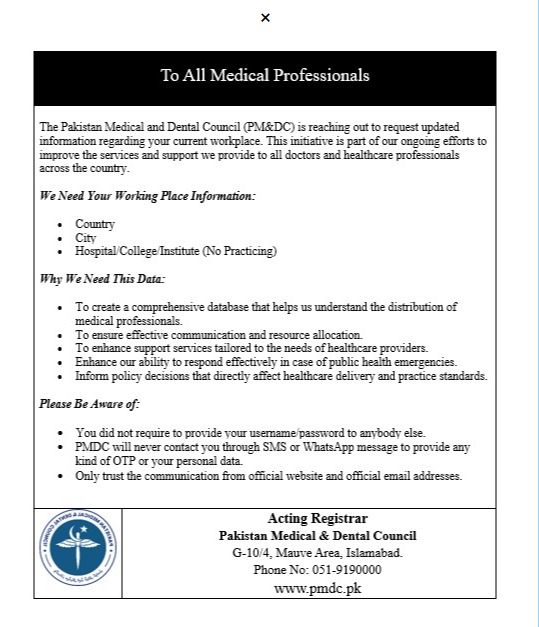
PMDC Working Place Data: Why Pakistan’s Medical Council Is Collecting Doctors’ Workplace Information

1. Introduction: Why PMDC Is Requesting Workplace Data

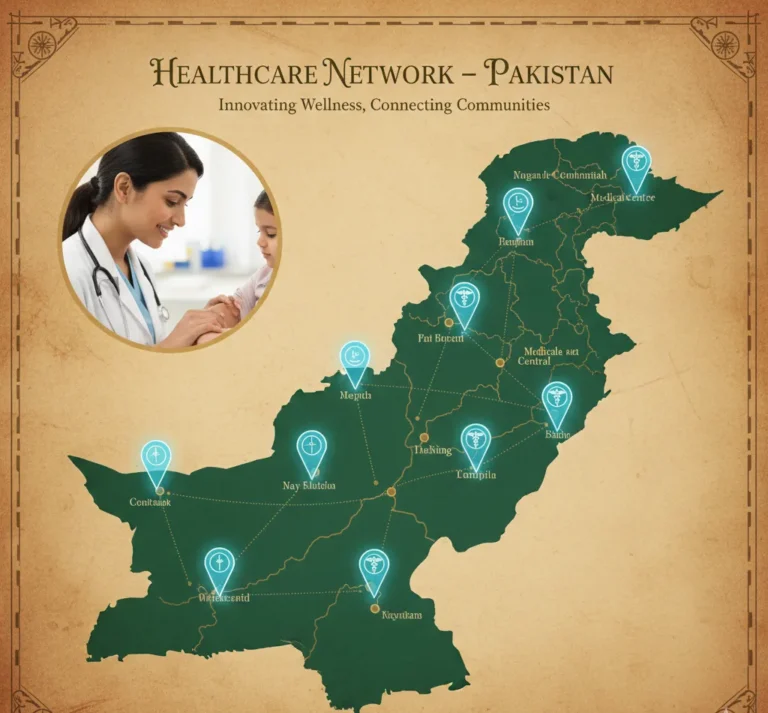
In a recent public notice, the Pakistan Medical and Dental Council (PMDC) has asked all registered medical professionals to update their working place information — specifically their country, city, and hospital/college/institute (if not in private practice). This PMDC working place data initiative aims to build a comprehensive and current registry of doctors across Pakistan. In this article, we explore the reasons behind this data collection, how it may benefit the healthcare system, and what you should do as a medical professional to comply.

Using the focus keyphrase “PMDC working place data” early ensures readers and search engines understand the article’s theme.

2. Why the Data Matters: Benefits for Policy, Resources, and Emergencies

When doctors submit their PMDC working place data, PMDC can develop a clearer picture of where medical professionals are working — which provinces, cities, and facilities have more or fewer staff. That insight enables:

  • Improved resource utilization: The government and health authorities can allocate supplies, equipment, or training where it is needed most.
  • Better communication: PMDC or government bodies can communicate more effectively with doctors (for information purposes, alerts, training) knowing their location and facility.
  • Emergency response: In case of an epidemic, disaster or public health emergency, knowing where doctors are responding can facilitate response support more quickly.
  • Evidence-based policies: Knowing actual workplace data supports policy development for clinical education, facility expansion, norms for staffing, and regulation.

This is not a mere bureaucratic exercise — it’s a tool for strengthening healthcare governance and ensuring that medical professionals aren’t invisible in the system.

3. What You Should Do & What to Watch Out For

If you are a registered medical or dental professional, here are steps and cautions to keep in mind when updating your working place information:

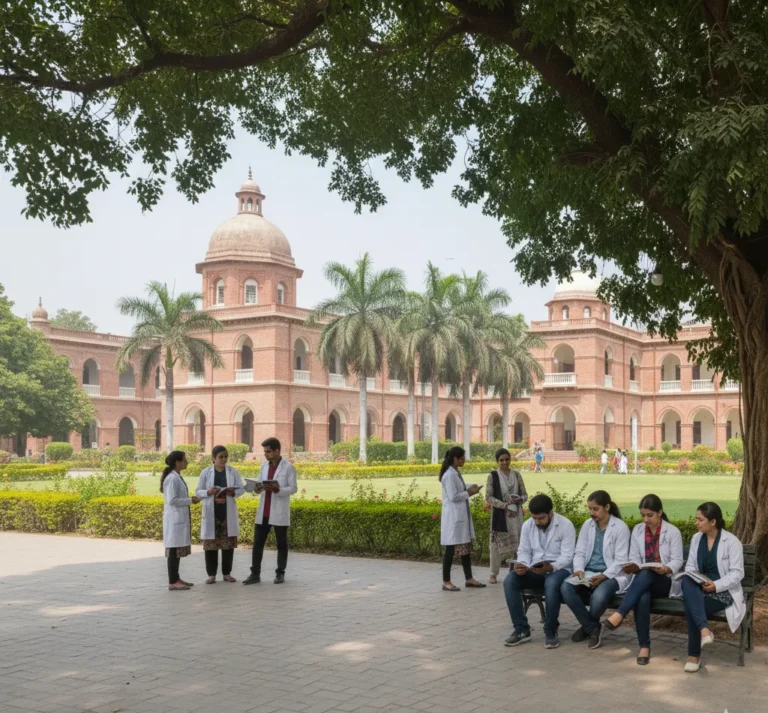
PMDC working place data map of medical professionals in Pakistan

a) How to Submit Your Data

  1. Visit the official PMDC portal (ensure it’s the verified domain).
  2. Log into your account (or create one if needed).
  3. Navigate to “Update Personal / Professional Information” or “Working Place Data” section (check PMDC’s public notice area). PMDC+1
  4. Enter your Country, City, and Name of Hospital/College/Institute (indicate “Not practicing” if you’re not currently in a facility).
  5. Double-check correctness and submit before any deadlines.

b) What to Watch Out For / Security Tips

  • Never share your username or password with anyone claiming to submit on your behalf.
  • PMDC will not contact you via WhatsApp or SMS asking for OTPs or login data – always verify communications via official email or their website.
  • Use secure passwords and change them periodically.
  • Verify that you are on the official domain (check URL, SSL lock).

By being cautious, you protect your credentials and help maintain the integrity of the system.

Sample Closing / Call to Action

Updating your PMDC working place data is a small step that carries big benefits — for yourself, for your province, and for Pakistan’s national health infrastructure. If you are a medical professional reading this, please take a few minutes to log into your PMDC portal and submit your current workplace information. Also, share this article with fellow colleagues to help spread awareness of this crucial initiative.

PMDC Tuition Fee Cap 2025-26: Rs 1.89 Million Limit

The PMDC tuition fee cap 2025-26 has officially set the maximum annual tuition fee for private medical and dental colleges in Pakistan at Rs 1.89 million. Announced by the Pakistan Medical and Dental Council (PMDC), this 5 percent increase from last year’s Rs 1.8 million limit aims to regulate rising education costs and protect students from excessive charges. The new medical college fee limit will apply for the 2025–26 academic session, with future adjustments linked to Pakistan’s Consumer Price Index (CPI) inflation rate.

Background and Rationale

The decision emerges from growing complaints by parents and students about excessive and sometimes hidden charges in private medical education. In response, the Prime Minister’s Medical Education Committee recommended a structured fee regime. Under the PMDC Act 2022, institutions that violate the cap or advertise higher fees risk suspension of accreditation, ban on admissions, or legal measures under Section 33. 

Importantly, the regulation mandates that private medical and dental colleges display their approved fee schedules at least three months before admission starts—this transparency is in line with Section 20(7) of the Act.  From the 2026–27 session onward, further yearly fee adjustments will align with Pakistan’s Consumer Price Index (CPI), making increases more predictable. 

Implications and Challenges Ahead

For students and parents

The cap at Rs 1.89 million offers some relief from unpredictable surcharges, although many will still find it burdensome. The link to CPI from 2026 onwards means that inflationary pressures may still push fees upward over time, albeit within a regulated framework.

For private institutions

Colleges may feel constrained in revenue planning, especially if their operational costs (faculty salaries, infrastructure, labs, equipment) rise faster than CPI. They must carefully budget to maintain quality within the limit. Any non-compliance, even in advertising, invites strict penalties. 

Enforcement and transparency

The success of this policy depends heavily on enforcement. PMDC must monitor fee declarations and act on violations. Transparent public display of approved fee structures is critical, so that students can hold colleges accountable.

Conclusion: A Step Toward Fairer Medical Education

The tuition fee cap established by PMDC for 2025-26 is an important step towards regulation in Pakistan’s private medical education system. In capping the fees to Rs 1.89 million and setting future increases based on CPI, the policy aims to balance sustainability of institutions and student protection. However, it will be the actual implementation of the policy that determines its success, through a combination of enforcement, transparency, and institutional adherence.

As the new fee cap begins its first calendar year, the stakeholders to pay close attention to the policy are students, parents, colleges and regulators, to ensure that this policy is effective for its purpose.

Punjab Public Schools to Establish Anti-Harassment Committees

A New Directive to Protect Students’ Rights

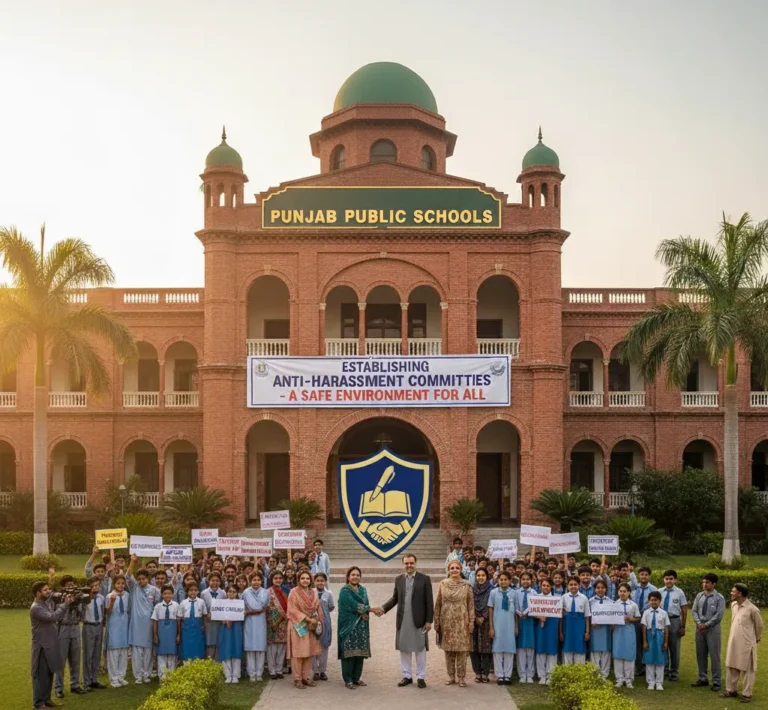
In a landmark decision, the Punjab government has signed into policy that all public schools establish anti-harassment committees to ensure students experience a safe, inclusive and respectful learning environment. The initiative was announced by the School Education Department (SED) under the leadership of Chief Minister Maryam Nawaz, to coincide with the International Day of the Girl Child.

The policy—framed around the focal keyphrase “Punjab public schools anti-harassment committees”—aims to address all of the following: (1) harassment prevention; (2) protection of the student; (3) protection and promotion of equitable gender relations in education. By enacting this policy, the Punjab government continues to demonstrate safety and well-being for the student, affirming that every child is entitled to a quality education in an enforceable community of dignity and trust.

2. How the Anti-Harassment Committees Will Work

According to the official notification normally issued by the School Education Department (SED), each primary, elementary, secondary, and higher secondary school across Punjab must promptly establish an anti-harassment committee and so on.

Each committee will consist of:

  • The school head (chairperson)
  • At least three teachers, and
  • Mandatory female representation to ensure gender balance and sensitivity

These committees will operate within the framework of the Protection Against Harassment of Women at Workplace Act, 2010, which purposefully extends the same legal protections for working women to students.

The duties and responsibilities of these committees are:

  •  To receive and inquire about complaints in a confidential manner
  •  See that the complainants are supported during the inquiry process
  •  See that the inquiry is fair and impartial
  •  To maintain written records, and outcomes of the complaints
  •  To submit reports to the District Education Authorities (DEAs) periodically

This the committee structure creates a mechanism for addressing harassment that is confidential, accountable, and effective. Including women on the committees is not only important, but vital – because it provides empathy and a sense of fairness and trust in dealing with affairs that are so sensitive in nature.

3. Creating a Culture of Accountability and Respect

Opening the anti-harassment committees in Punjab public schools is not only a question of compliance, but rather an alteration of school culture. It represents a shift towards decent school governance, student agency and zero tolerance of harassment.

The publicized move conveys a clear message that harassment in schools will no longer be obfuscated. Harassment will now have to be dealt with through formal processes, trained committees, and a degree of accountability. In the wake of growing pains in implementing these protocols in schools, both teachers and students will learn what it means to be respectful, empathetic, and equal partners in educational institutions.

Over time, these committees will also help trust between students and administrations, with the latter taking incidents seriously enough to make the risk of reporting worthwhile to victims of harassment. The initiative also invites schools to start shame-free and judgment-free awareness sessions, training for teachers, and accessible reports.

Final Thoughts

This move by the Punjab entities is a significant step toward educational reform and student safety. Bringing anti-harassment committees into Punjab’s public schools opens doors for the rest of the provinces and sets tightly coupling educational values and safety. By establishing accountability, confidentiality, and respect in the school cultural frameworks helps to make way for better equitable and safer places of learning for all children in Punjab.

Pakistan Introduces New 10-Tier Grading System from 2026

1. A Major Shift: Why Pakistan Is Changing Its Grading Policy

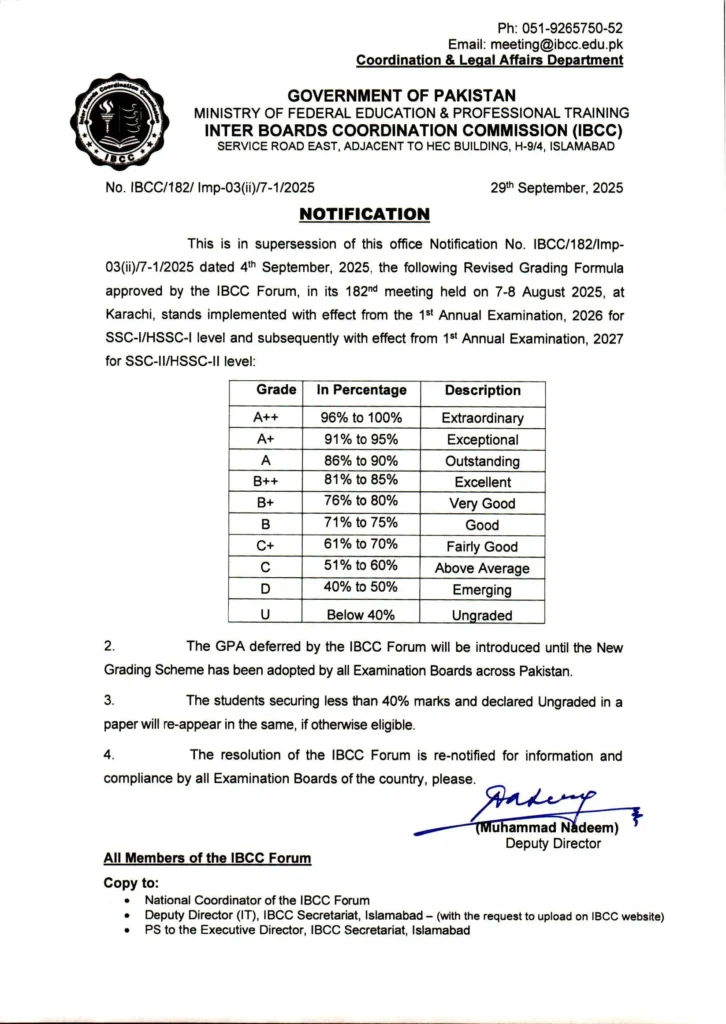
The new grading system Pakistan 2026 marks a significant departure from the traditional marks-based evaluation. The Inter Board Coordination Commission (IBCC), the official forum of all education boards across Pakistan, has announced in a formal notification that a revised grading structure will be introduced in phases starting in 2026.

Importantly, this updated model excludes the GPA/CGPA component that had been part of earlier drafts. During the Karachi meeting of all board heads, many universities voiced hesitation in adopting GPA-based admissions immediately, so the boards agreed to delay GPA’s inclusion. The Express Tribune

By deferring GPA and focusing first on letter-grade classification, the authorities aim for a smoother transition. As IBCC’s Executive Director, Dr. Ghulam Ali Mallah, noted: “Universities are not yet ready to offer admissions based on the GPA system … so we begin without it.”

This move responds to concerns about harmonisation, fairness, and readiness at higher education institutions.

2. Understanding the New 10-Tier Grading Scale

The heart of the new grading system Pakistan 2026 lies in a more granular letter-grade structure, inspired by international models such as Cambridge assessments. Previously, marks from 80–100 % were lumped into a single “A1” grade. Now, that span will be subdivided into four elite categories: A++, A+, A, and B++. 

Here’s how the grading breakdown will work:

Marks (%) Letter Grade Descriptor / Category
96 – 100 A++ Extraordinary
91 – 95 A+ Exceptional
86 – 90 A Outstanding
81 – 85 B++ Excellent
76 – 80 B+ Very Good
71 – 75 B Good
61 – 70 C+ Fairly Good
51 – 60 C Above Average
40 – 50 D Emerging
Below 40 U (Ungraded) Unsatisfactory / Retake Needed


Students who receive a “U (Ungraded)” can make a claim in those subjects acceptable to other academic considerations.

Also, passing a subject will move up from 33% to 40% under this newly conceived system.

The aim is to provide more differentiating power at the top of the distribution and to minimize grade inflation.

New grading system Pakistan 2026

3. Phased Development and What to Expect

To phase the new grading system Pakistan 2026 in is based on a true phased implementation process:

2026, Grades 9 (SSC-I) and 11 (HSSC-I) are directed to phase in the new system.

The Federal Board (FBISE) has also timed its schedule in this manner: the new grading system will be operational in 2026 matriculation exams and will transition to the new grading system in 2027 for intermediate (FA/FSc) exams.

To ease the workload at universities who may not be ready to assimilate GPA into their admission process, GPA/CGPA is also on hold. And this decision is justified. Again, institutions and systems’ infrastructure, rules, policies, will evolve to use GPA in the near future.

Critics and educationists are weighing in on this transition: while the broad-scale response has been favourable in terms of its transparency and differentiation, the other perspective is that raising the passing mark and phasing out GPA/CGPA can be challenging or perhaps create ambiguity in the immediate sense. But on the whole, a consensus emerged that Pakistan needed a new and globally comparable grading system.

Uncontrolled Fee Hikes by Islamabad Private Schools: Senate Demands Accountability

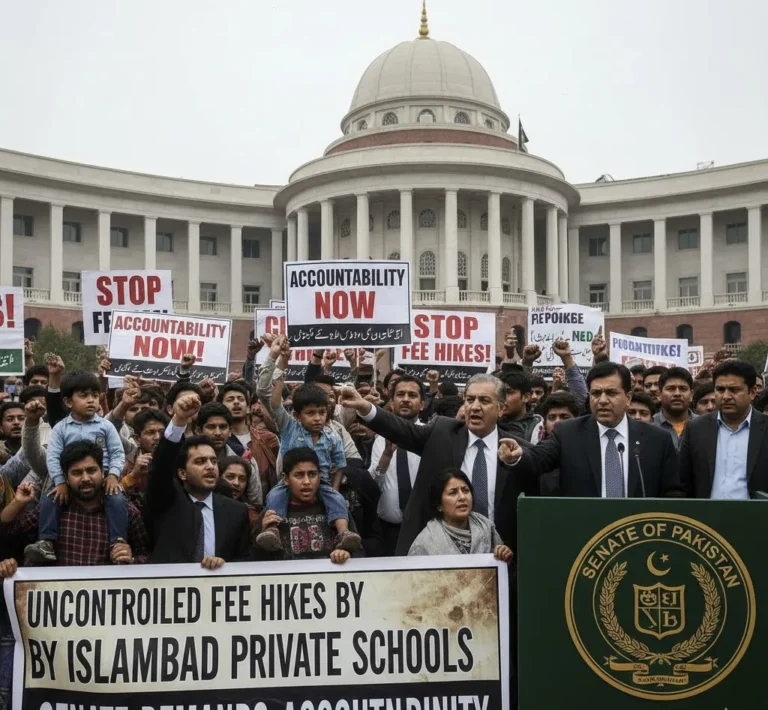
The uncontrolled fee hikes by private schools in Islamabad have sparked serious concern among parents and lawmakers alike. During a recent meeting, the Senate Standing Committee on Federal Education warned that these rising costs are violating PEIRA’s guidelines and placing an unfair financial burden on families. As education becomes increasingly expensive, stricter regulation is now being demanded to protect parents and ensure transparency in school fee policies.

The Regulatory Framework and Its Challenges

Under the PEIRA Fee Determination Policy, private schools in Islamabad are allowed to raise tuition fees by up to 5 percent annually, with a maximum of 8 percent reserved for high-performing institutions. The policy also explicitly prohibits institutions from forcing parents to purchase books or uniforms from specific vendors. 

However, enforcement has lagged. Several elite schools have reportedly imposed fee increases as high as 12 percent, violating the regulation.  Complaints from parents — including demands for advance payments, penal charges for late payment, and non-transparent fee structures — further underscore systemic weaknesses. 

A major hurdle is the weak oversight and complaint resolution mechanism. While PEIRA claims to act upon complaints, many cases remain unresolved or are settled in favor of schools despite clear contraventions. The News  Senate committee has also been alerted to internal conflicts within PEIRA, including allegations of dual salaries and misuse of authority, which undermine its legitimacy. 

Impacts, Demands, and Path Forward

Impact on Parents and Students

The implications of uncontrolled increases in fees are stark. Many families falling at the middle and lower middle incomes are increasingly challenged by rising school fees that pose a barrier to quality education. Working parents simply are unable to plan or budget when the school fee costs suddenly increase. Alternately, students may feel pressured to leave the school altogether, or may be forced to leave the school for another school.

Senate Committee Actions

In its recent meeting, chaired by Senator Bushra Anjum Butt, the Senate panel expressed urgent concern and demanded corrective action. It ordered schools charging fees of Rs 50,000 or more to revise their challans in line with PEIRA guidelines.  The committee also asked for updated lists of schools violating the fee caps and urged PEIRA to take strict enforcement action. 

What Needs to Be Done

In order to remediate the crisis, there are several actions that are necessary:

Strengthen Enforcement & Transparency

PEIRA must have ”teeth”. We must give PEIRA the ability to penalize, revoke licenses, or suspend practices for habitual offenders. All schedules of fees and rationales should be disclosed so the public can analyze them.

Strong Grievance Redressal

A justifiable grievance mechanism must be clearly defined, publicized and reasonably timed (what matters is that we institute a binding response time & sanction non-responsiveness) – an independent panel of review could ensure accountability.

Periodic Audits and Monitoring

The government should mandate the periodic oversight (audit), both financially and managerially of private schools (but particularly those charging higher fees). Whether the school can justify an increase in fees should be based on the size of the funding, infrastructure of the school, and student output.

Public education & empowering Parents

Parents need to familiarize themselves with their rights regarding the PEIRA policy. Parent bodies and civil society, and the media should document increases in fees and provide transparency if the school refuses to adhere.

Political Will & Legislative Clarity

We urge the government to support amendments (where necessary) to reinforce the ”mandate” of PEIRA (or whatever instrument is developed). These recommendations need to galvanize the Senate’s attention and news production towards a lasting reform in policy.

Conclusion

Unchecked and uncontrolled fee hikes by private schools erode trust, hurt families, and compromise educational equity. The recent Senate intervention signals a renewed push to hold institutions accountable. But true reform will require robust enforcement, transparency, and empowered stakeholders. Only then can we ensure that access to quality education is preserved — without unfair financial burden on families.

OxfordAQA New O-Level Syllabi: Islamiyat, Pakistan Studies & Urdu for Pakistani Students

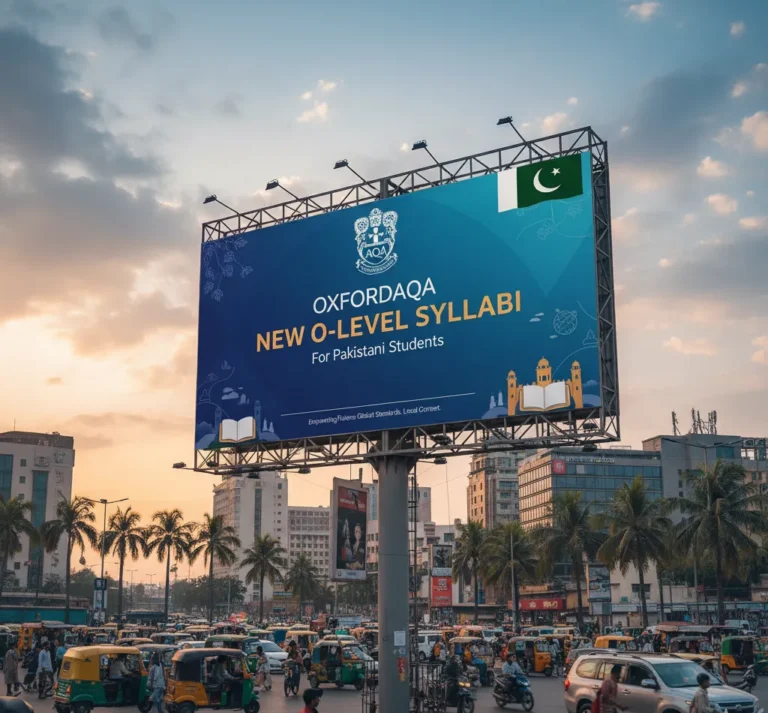
The launch of the OxfordAQA new O-Level syllabi in Islamiyat, Pakistan Studies, and Urdu marks a major milestone for education in Pakistan. Designed to balance academic rigor with local relevance, these updated curricula emphasize critical thinking, analytical skills, and exam preparation. By blending Pakistan’s cultural heritage with global perspectives, the OxfordAQA syllabi ensure students are not only ready for exams but also prepared for the challenges of a rapidly changing world.

1. What the New Syllabi Cover & Why They Matter

Under the revised curriculum, Urdu, Islamiyat, and Pakistan Studies are now more than just rote-memorization topics; rather, they have been reordered with defined evaluation systems and More focus on abilities like evaluation and implementation. For instance, the Islamiyat syllabus combines scriptural study (Qur’an and Hadith) with knowledge of beliefs, customs, modern Islamic problems as Oxford AQA+1

Students in Pakistan Studies investigate Pakistan’s evolution into the twenty-first century as well as optional subjects such as globalization or the Pakistan movement from 1857 to 1947. Sustainable Development: Oxford AQA Geography, economics, and the population of Pakistan are woven into a holistic story; at the same time, the Urdu curriculum corresponds with the Oxford AQA 9264 standard to improve reading, writing, and expressive abilities in the national language. Oxford University Press Pakistan

These developments are significant as they link students to international viewpoints yet root education in local circumstances. Rather than seeing Urdu or Pakistan Studies as In foreign curricula, “backward” or unimportant, the new syllabi seek to highlight Pakistan’s part in a world in transition. Nighat Gaya Bajwa wrote the books. Deliberately utilizing simple, straightforward language, Dr. Faizuddin Ahmed for Islamiyat, Nigel Smith for Pakistan Studies, and Dawn+1—

2. Benefits & Challenges of Implementation

Benefits

  • Better analytical abilities: Students will be pushed to examine sources, contrast points of view, and assess arguments—abilities useful outside of exams.
  • Cultural Relevance: Instead of Pakistan or Urdu The curriculum brings forth real life, books, and identities as studies are just formalities.
  • With books aligned to the revised syllabi, teachers and pupils will have more clear understanding of what is expected in assessments.
  • Global preparedness: The curriculum connects local issues with global ones—whether in Islamiyat (current Islamic discussions) or Pakistan Studies (development, climate change).

Troubles

  • Teacher preparation: Many teachers are accustomed with older syllabi. Successful delivery would depend on enough training and professional development.
  • Access to the new textbooks or supplemental materials might lag in certain schools, notably low-funded or rural ones.
  • For pupils and teachers moving from the older curriculum mid-program, matching past work with the new demands might prove difficult.
  • By having a more comprehensive syllabus, teachers could rush through content rather than encourage in-depth knowledge.
  • School systems must provide continuing workshops, support materials, mock evaluations, and peer learning systems to conquer these obstacles.

3. How Schools, Teachers & Students Can Adapt

Schools & Administrators

  • Phased rollout: Introduce the new syllabi gradually, perhaps starting with one subject before all three, to allow time for adaptation timely.
  • Support library & resources: Ensure the new textbooks and guides are available in school libraries or digital format nedded.
  • Monitoring & feedback loops: Collect feedback from teachers and students periodically to identify pain points for this issue.
  • Partnerships: Schools may partner also with OUP/OxfordAQA for training sessions or webinars to better understand assessment style and expectations.

For Teachers

  • Understand the exam format: Carefully review the specification—for instance, Islamiyat now has two papers of 1h30m each, each carrying 50 marks. Oxford AQA+1
  • Use inquiry-based learning: Encourage students to ask questions like “Why did this event occur?” or “What alternative interpretation exists?”
  • Integrate past exam practice: Provide regular past or specimen exam questions to build exam literacy.
  • Peer learning & professional development: Collaborate with fellow teachers to share strategies for teaching difficult topics.

For Students 

  • Concentrate on ideas rather than memorizing; know why something important is not merely what it is but rather why it is.
  • Perform analysis of sources by studying Hadith, Qur’anic verses, historical papers, and maps.
  • Develop fluency by using the OxfordAQA Urdu textbook model essays and writing assignments. Oxford University Press Pakistan
    Ask instructors for clarification early rather than delaying if a topic feels unclear.

The OxfordAQA new O-Level syllabi can really change educational results in Pakistan if both teachers and pupils move toward more thorough understanding and constant development.

AIOU Admissions Autumn 2025 for Deeni Madaris Students

0

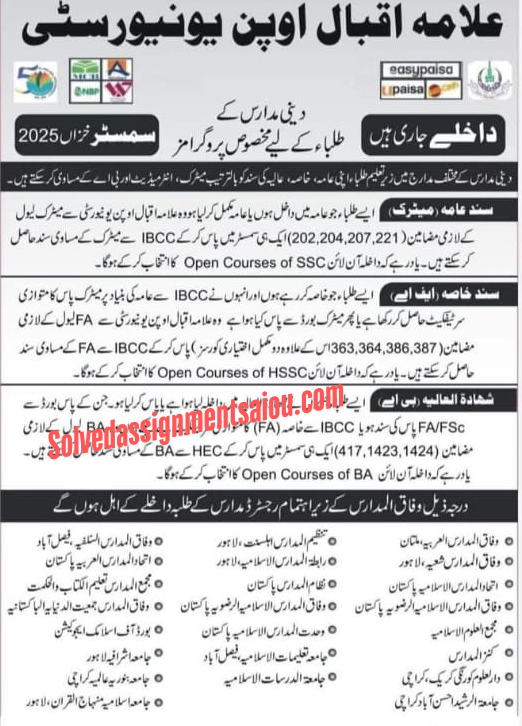
If you are a student at a Deeni Madrasa and are looking for higher academic education in Pakistan, you are at a great place currently. Allama Iqbal Open University (AIOU) has publicly announced Admissions for Autumn Semester 2025 for the Deeni Madaris students. AIOU is providing students with the medium to bridge the gap between land education and higher academic qualifications by converting your Deeni Madrasa education into recognized Matric, FA, and BA certificates.

In this article, we will provide you with a complete guide to AIOU Admissions Autumn 2025 for Deeni Madaris Students — including eligibility criteria, degree programs, benefits, application process, and SEO FAQs to get a better understanding of this opportunity.

AIOU Admissions Autumn 2025 notice for Deeni Madaris students

Why Choose AIOU Admissions Autumn 2025?

AIOU is Pakistan’s first open university, serving millions of students nationwide. The Autumn 2025 semester brings a special focus for madrasa students, enabling them to:

  • Get their education recognized by IBCC and HEC.
  • Continue studies in Matric, Intermediate (FA/FSc), and Bachelor’s (BA).
  • Enhance career opportunities in both religious and professional fields.
  • Benefit from distance learning with affordable fees.

Programs Offered for Deeni Madaris Students

Secondary School Certificate (SSC) Equivalent

  • Students with Shahadat-ul-Sanvia Aama can get equivalence for SSC.
  • Eligible for admission in Open Courses of SSC.
  • IBCC recognition required.

Higher Secondary School Certificate (HSSC) Equivalent

  • Students with Shahadat-ul-Sanvia Khasa can get equivalence for FA (Intermediate).
  • Eligible for admission in Open Courses of HSSC.
  • IBCC equivalence mandatory.

 Bachelor of Arts (BA) Equivalent

  • Students with Shahadat-ul-Aalia (equivalent to FA/FSc) and Shahadat-ul-Aalmia (equivalent to BA) can enroll.
  • Recognized by HEC and IBCC.
  • Eligible for Open Courses of BA.

Admission Process – Step by Step

  1. Check Eligibility

Verify your madrasa degree equivalence through IBCC.

  1. Collect Required Documents

  • Copies of madrasa certificates.
  • CNIC or B-Form.
  • Passport-size photographs.
  1. Apply Online

  • Visit the official AIOU website.
  • Fill out the admission form.
  • Upload scanned documents.
  1. Fee Submission

Pay admission fee through Easypaisa, JazzCash, or designated bank branches.

AIOU Admissions Autumn 2025 notice for Deeni Madaris students
  1. Confirmation

Receive admission confirmation via SMS/email from AIOU.

Key Benefits of AIOU Autumn 2025 Admissions

  • Accessibility: Study from anywhere in Pakistan.
  • Affordability: Low-cost education compared to private institutions.
  • Recognition: IBCC & HEC recognized degrees.
  • Flexibility: Ideal for madrasa students who want both religious and modern education.
  • Career Growth: Opens opportunities in government jobs, higher studies, and teaching.

Important Universities & Boards Accepting Equivalence

  • Federal Board of Intermediate and Secondary Education (FBISE)
  • Punjab University, Lahore
  • Bahauddin Zakariya University, Multan
  • University of Peshawar
  • Karachi University
  • Quaid-e-Azam University, Islamabad


Conclusion

Admissions for Deeni Madaris students to AIOU for Autumn 2025 is a historic opportunity to mainstream madrasa education. Seize the opportunity to pursue higher education, earn a recognized degree, and help brighten your future.

If you are (or know of) a madrasa student who wishes to increase their academic and professional opportunities, do not miss this admission cycle. Start your journey today at Allama Iqbal Open University.

AIOU Fresh Admission Status Check – Step by Step Guide for New Students

Introduction – Why Checking AIOU Fresh Admission Status is Important

Are you a new student with concerns about your AIOU Fresh Admission Status Check? Allama Iqbal Open University (AIOU) facilitates you to check your admission application online easily. Once you log into AIOU’s admission status portal, you can determine if your admission application is submitted, in objection, or verified. Checking your admission status is important so that you can abide by timelines to enroll in your desired program without unnecessary delays.

Step 1: How to use AIOU admission Portal

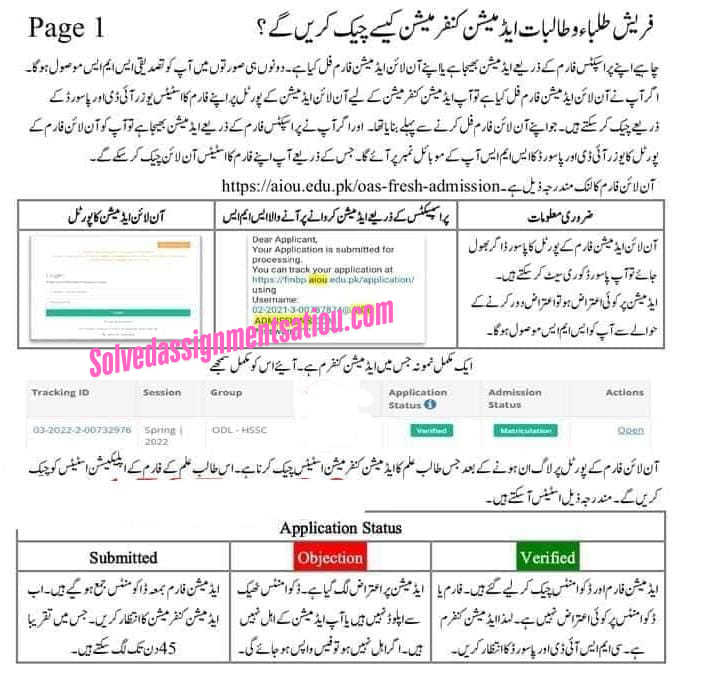
To check your admission status, go to the AIOU admission portal at https://aiou.edu.pk/oas-fresh-admission. Once you submit your admission form, you will receive a Tracking ID and password by email or SMS. With this information, you will be able to log into your admission portal and view your application status.

For more details visit: AIOU Official Admissions

Step 2: Understanding AIOU Admission Status Options

Once you log in to the portal, you’ll see your application status listed under the following three categories:

  • Submitted Status: You have submitted your admission form but it is not verified yet. This process can take up to 45 days.
  • Objection Status: If any required information or documents is not received, your application status will show Objection, and you will need to correct it immediately to avoid cancellation.
  • Verified: This means your admission is accepted and approved. You can proceed with further steps like course registration.
AIOU Fresh Admission Status Check guide for new students to track application, objections, and verification

Step 3: Common Issues in Admission Status

Many students face challenges such as pending verification, document mismatches, or objections. If your status shows Objection, don’t panic. Review the remarks, upload required documents again, or contact the admission department. Quick action ensures your application is verified without unnecessary delays.

Step 4: Tips for New Students – Smooth Admission Process

For fresh admissions, students must:

  • Regularly check their AIOU Fresh Admission Status.
  • Keep a record of their Tracking ID and login credentials.
  • Verify all educational documents before submission.
  • Respond to objections within the given time frame.

By following these tips, you can ensure a smooth admission journey without stress.

Conclusion – Stay Updated with Your Admission Progress

It is essential for any new student to check their AIOU Fresh Admission Status, and this process is easy. The university has built a straightforward application portal where applicants can track the progress of their application status, resolve objections, and realize verified admission. So, be vigilant, consistently monitor your application portal, and enter AIOU without any obstacles.

University of Lahore Scholarships 2025: Fully Funded Bachelor Programs for 90%+ Students

Introduction

If you scored 90% or above in Intermediate (or equivalent, e.g. A-Level) and dream of studying without worrying about tuition fees, the University of Lahore Scholarships 2025 is your chance. These fully funded undergraduate scholarships are open for high achievers across all Bachelor programmes at UOL. This post will guide you through eligibility, covered programs, how to apply, and why this is a golden opportunity for Pakistani students.

What Are the University of Lahore Scholarships 2025?

The University of Lahore Scholarships 2025 is a merit-based initiative with a 100% tuition fee waiver for undergraduate (Bachelor) programmes at UOL. isi.org.pk Its aim is to eliminate financial barriers for the best-performing students in order to promote high-achieving students and provide access to higher education. 

Who Is Eligible?

To qualify:

  • Minimum Marks: 90% in Intermediate / equivalent (e.g. A-Level). isi.org.pk
  • Level: Only for undergraduate / Bachelor degree admissions. isi.org.pk
  • Selection Basis: Merit + UOL admission & document verification. isi.org.pk
  • Other Requirements: Must fulfil UOL’s admission criteria (CNIC/B-Form, transcripts, photos etc.). isi.org.pk

What Does the Scholarship Cover?

  • Tuition Fee Waiver: 100%, for the full duration of the Bachelor programme, as long as academic performance meets UOL’s standards. 
  • Programs Eligible: All undergraduate programmes at UOL including:
  • Sciences & Engineering (Engineering, Technology, IT, Computer Science)
  • Health & Life Sciences (Pharmacy, Allied Health Sciences)
  • Business, Social Sciences, Management 
  • Creative & Cultural fields, Innovation & National Need discipline programmes isi.org.pk

How to Apply

Here is a step-by-step guide:

  • Check your eligibility: Confirm you have 90%+ and the required credentials.
  • Prepare your documents: Transcripts, CNIC/B-Form, photographs, and any programme-specific forms.
  • Submit application: Use UOL’s official admission portal and scholarship form.
  • Await verification & merit evaluation: UOL will verify your documents and academic record.
  • Admission offer & enrollment: If selected, accept the offer and get enrolled under the scholarship.

Make sure to follow deadlines and official instructions from UOL.

Why This Scholarship Matters

  • No tuition worries: Let hard work, not fees, decide your future.
  • Wide program choice: Fields from engineering to creative arts are included.
  • Boost your career: Programmes in high-demand fields like tech, healthcare, business.
  • Recognizing merit: Your academic achievements are rewarded, making higher education more accessible.

Frequently Asked Questions (FAQs)

Q1: Is the scholarship renewable every year?
Yes – it’s generally valid for the whole duration of your Bachelor’s degree, provided you maintain good academic performance. isi.org.pk

Q2: Can A-Level students apply under this scheme?
Yes, students with equivalent qualifications to Intermediate are eligible, and UOL will evaluate based on their equivalency rules. isi.org.pk

Q3: Does “fully funded” include living expenses?
No – the announcement focuses on tuition fee waiver. There is no explicit mention of allowances for living expenses. Check with UOL for any additional support

Conclusion

Students who achieved 90% or higher marks and are thinking about a Bachelor’s degree without tuition fees can take advantage of a unique opportunity with University of Lahore Scholarships 2025. This scholarship with a full fee waiver available, various programs, merit-based selection could very well take care of you. Start collecting your documents and check for UOL’s admission schedule in advance, I would suggest that you apply as soon as possible.