Schools collect more student data every year, and most of it ends up in a single platform. Over time that platform holds the grades and personal records of every learner who has ever enrolled . Keeping so much in one place makes the platform a valuable target, because one successful break-in can expose all of it. That break-in does not need advanced tools similar case you can find out in Secure educational software development. A reused password, or a former teacher’s login that was never removed, can be enough.
When a breach does happen, repairing the system is only part of the recovery. Regaining the trust of students and parents takes much longer. Since that damage is so hard to undo, the safest approach is to prevent it by building protection into the software from the start. That is what secure educational softwaredevelopmentdoes, and it forms the basis of strong educational data security. To understand why it matters, start with what makes student data so sensitive.
Why Student Data Needs Stronger Protection
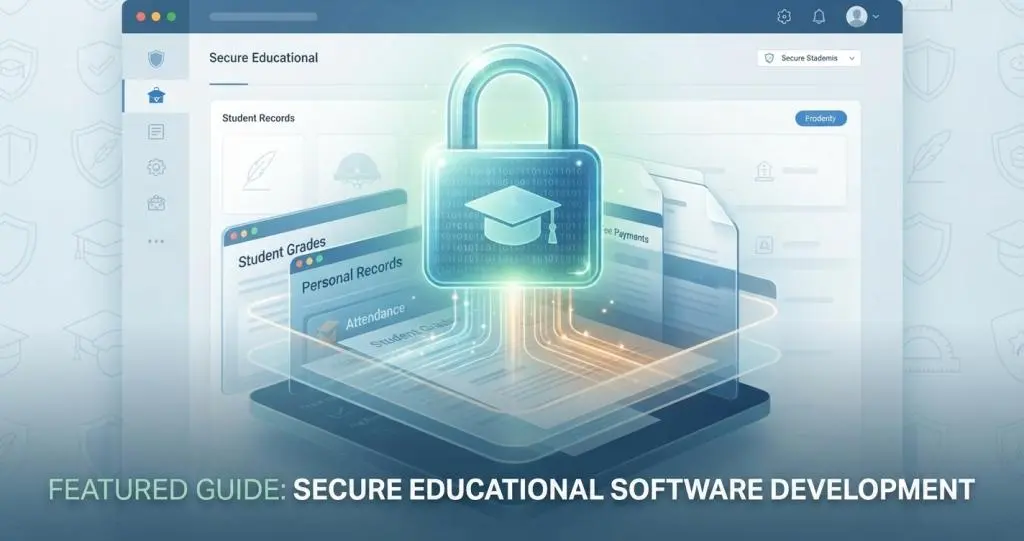
A single student record contains different types of data. For example,
- Date of birth
- Home address
- Years of exam results
- Fee payments
Any breaches of such data can lead to severe problems. A bank can cancel a stolen card within hours, but a date of birth stays the same for life. That is exactly why attackers value student data. It remains useful for identity fraud long after the breach. Schools also face cybersecurity challenges in education technology that most businesses rarely deal with. Here are some areas that can cause security breaches:
- Thousands of students log in from personal phones and laptops
- Staff accounts change every term, and old logins are easy to forget
- Admissions and grading often run on separate systems that were never built to share data safely
- Many IT teams are small, so security reviews happen less often than they should
Each of these opens another door for attackers. That is why educational data protectionhas to cover the whole platform, from the first login screen to the last backup.
What Does Secure Educational Software Development Mean?
Secure educational software development, orsecure EdTech development, means building educational software with security planned in from the very beginning. In practice, the development team decides early who can see each type of record and how that data will be stored. They test for security vulnerabilities at every stage, and they keep testing after the platform goes live. Planning early and ongoing testing keep the software secure from the start. Problems found during the build are usually cheaper and easier to fix. The same security checks continue after launch, so every update is tested against the same standards. This is howeducational software security works in practice, and it is the basis of strong education data security.
How Secure Educational Software Development Protects Student Data and Academic Records
Secure educational software developmentcontrols who can open and change each record, and it makes sure those records can be restored if something goes wrong. These five safeguards reflect the best security practices for student information systems.
Role-Based Access Control
A teacher needs to see a student’s grades and attendance but has no reason to open that student’s fee records. Role-based access control handles this by giving each user access only to the records their role requires. Teachers see grades for their own classes, while the finance team sees payment records. When a staff member changes roles or leaves, their access is updated or removed straight away.
Data Encryption
Access controls decide who can open a record, but attackers sometimes copy files directly from a server. Encryption protects against that by making the files unreadable to anyone without the correct key. Good educational application security encrypts student data in two places:
- In transit: when records move between a device and the server over HTTPS
- At rest: when records are stored in databases and backups
A stolen copy of the grade database then cannot be read without that key.
Multi-Factor Authentication
Sophos’s State of Ransomware in Education 2026 report found that identity-based techniques, such as phishing and stolen credentials, were used in 85% of ransomware attacks on education institutions. Multi-factor authentication (MFA) adds a second login check, such as a code from an authenticator app, and matters most for staff and admin accounts. MFA alone is not enough, though. Most credential-attack victims in the same report already had it enabled, so pair it with phishing-resistant options, such as passkeys or security keys, and alerts for unusual sign-ins.
Audit Logs for Academic Records
If a grade changes overnight, can you tell who changed it? Audit logs can record every view and edit, along with the user’s name and the time. They help staff spot unauthorized changes early, and they provide clear evidence if a dispute or investigation follows.
Secure Backups and Recovery
Ransomware can lock a school out of its own records. Regular, encrypted backups give the school a way to restore its data without depending on the attackers. Many IT teams follow the 3-2-1 rule: three copies of the data, on two types of storage, with one copy kept offsite or offline. Backups are the final layer of data security, so test a full restore at least once a term to confirm they work.
How to Plan a Secure Education Platform
Start with the data. List every type of student information the platform will store, from grades to fee records, and decide which roles need access to each one. That list will shape your access rules and your backup plan. Next, find out which data protection rules apply to your institution. Most countries now regulate how student and personal data is stored and shared, and the requirements vary by region. A legal advisor can confirm what you must follow, and the educational software you build or buy should meet those rules from the start.
Then put these questions to your development team or any vendor you are considering:
- Do you follow a recognized secure coding standard, and can you explain which one?
- How often do you run penetration tests, and will you share the results?
- Where will student data be stored, and who on your team can access it?
- How quickly will you notify us if a breach happens?
Clear, specific answers show that secure EdTech development is part of their process from day one. Vague answers are a warning sign for youreducational data security.
Building Trust Through Secure Educational Software
Parents expect their child’s grades and personal details to stay private, and that expectation lasts long after a platform goes live. That is why educational data security needs ongoing attention. Staff change and attackers adjust their methods, so review access rights each term and test that your backups restore correctly. Done consistently, secure educational software development protects student data and academic records over time. It also shows families that their information is handled with care.
Author Bio

Samrat Biswas is a distinguished VP of Operations, Engineering, and Growth at Unified Infotech, renowned for his deep expertise in scaling teams and refining processes. Samrat’s writings are informed by his wealth of experience, offering readers valuable insights into the intricacies of engineering leadership, operational efficiency, and driving transformational change within organizations.
SAMRAT BISWAS
Personal Website : https://www.samratbiswas.com/thoughts
LinkedIn :http://linkedin.com/in/samrat-biswas-ops
Email address: marcom@unifiedinfotech.net