A New Era Begins in Merit Assessment
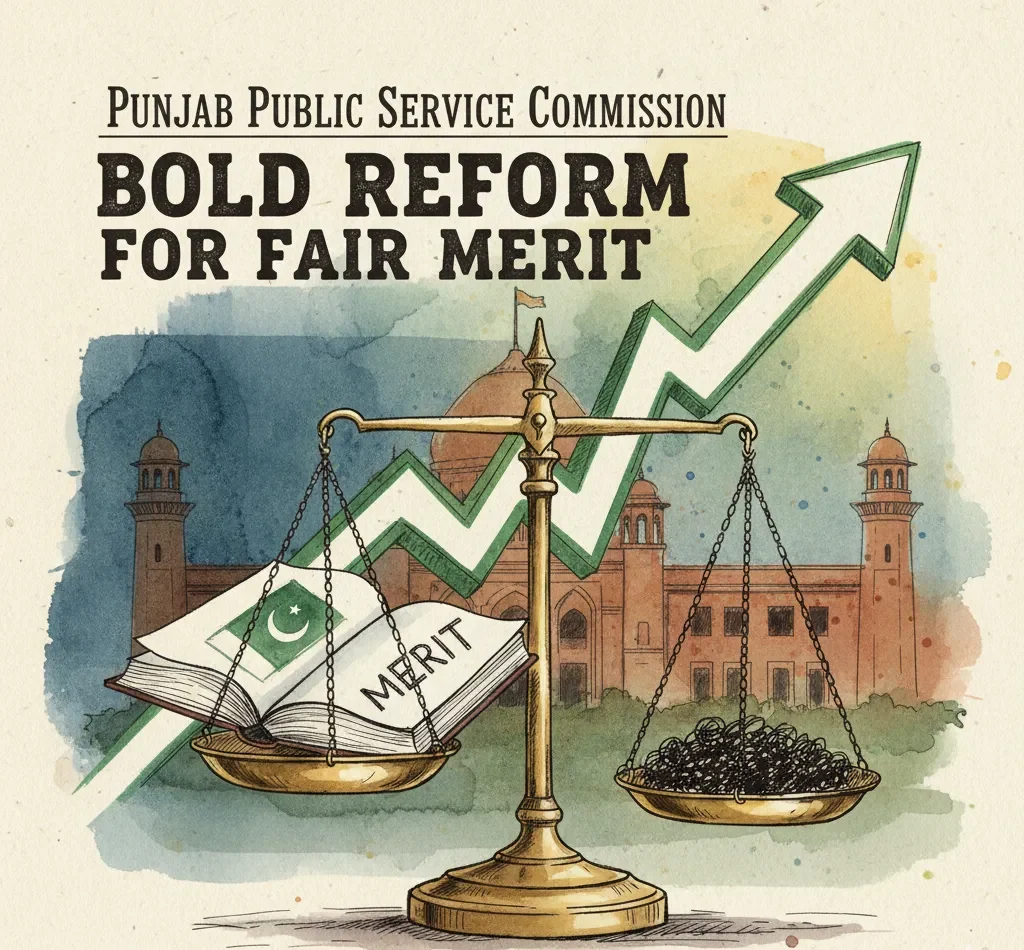
The Punjab Public Service Commission (PPSC) is making a major change by deciding to exclude marks for academic qualifications from the final merit, starting January 1, 2026. Under the new policy and merit-based recruitmentcandidates‘ final selection order will be based completely on the written test and the interview. The PPSC abolish academic marks policy marks a historic turning point in Punjab’s civil service recruitment system. The Punjab Public Service Commission (PPSC) has officially decided to remove academic marks from the final merit calculation starting January 1, 2026. Under the new policy, candidates will be evaluated solely on their written exam and interview performance. This move is designed to eliminate bias caused by inconsistent grading systems across educational institutions, ensuring a more transparent and merit-based selection process.
Why This Reform Matters
The reform has generated a great deal of positive feedback from many former PPSC members, as well as senior civil servants and educationists, all of whom recognize it as, “one of the most progressive and reformative steps in the commission’s long history.” The elimination of academic marks rectifies entrenched inequities stemming from differentiation in marking standards between educational institutions. Many believe the new policy establishes equal opportunity to the extent that candidates are assessed solely on their performance which might include analytical skills, depth of knowledge about the subject area, and interview skills alone. This adjustment by the commission signals a clear sign that merit-based selection is not a slogan, but a structural approach to the core selection process.
Implications for Aspiring Candidates
For aspirants who are preparing PPSC interview preparation that are proctored by the PPSC, this change means revised expectations regarding exam preparedness or interview skills instead of relying on previous academic record. Applicants from varied academic experiences (whether academically strong or, perhaps, attaining middle-of-the-road academic grades) will, therefore, now start out in a more equal field. This highlights the importance of adroitly curating a smart study plan, conducting mock tests and/or assessments, developing general knowledge and current affairs, and feeling comfortable regarding interviews. Coaching centres and other aspirants will need to adapt to this new “normal” and fully justify a meritorious type of evaluation in which past academic credentialing will not serve any role in the final merit before government jobs Punjab 2025.
Looking Ahead: Fairness, Challenges & Opportunities
In PPSC reform 2026 while the policy is widely welcomed, the transition will require rigorous implementation and clear communication from the PPSC to avoid confusion among candidates and institutions. Ensuring the written test and interview formats remain robust, bias-free and transparent will be critical to fulfilling the reform’s promise of Punjab Public Service Commission update. If executed well, this reform could mark a turning point in institutional governance and serve as a blueprint for other provincial recruitment bodies. Ultimately, the move cements PPSC’s commitment to modern governance standards and may encourage increased public trust and participation in the civil service recruitment process.